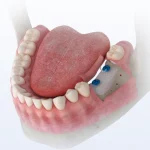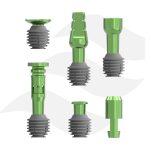
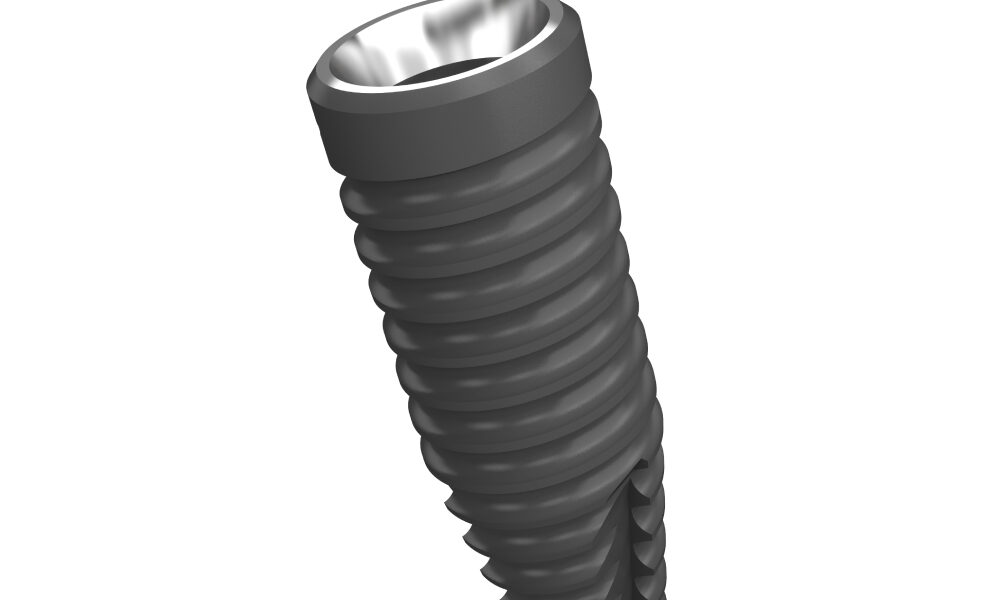
BLT stands for Bone Level Tapered. It is a bone-level tapered implant design in the Straumann Bone Level implant line and is also one of the most widely used implant platforms in dental implantology.
If you have worked with Straumann restorations, you have probably often seen these names:
- BLT 2.9 SC
- BLT 3.3 NC
- BLT 4.1 RC
- BLT 4.8 RC
The number in each name represents the implant diameter in millimeters, while the letters SC, NC, and RC represent the prosthetic connection platform. Understanding both is important because prosthetic component compatibility is often determined by the connection, not just the diameter.
This article will answer:
- What does BLT mean?
- Which implant system does BLT belong to?
- What dimensions are available for Straumann BLT?
- What are the differences between SC, NC, and RC?
- What are the differences between BLT, BL, and BLX?
- How can you identify the correct prosthetic components?
What Does Straumann BLT Mean?
BLT = Bone Level Tapered
BLT is an abbreviation of three words:
- Bone Level — This is a bone-level implant. The implant platform is designed at bone level, usually flush with or slightly below the alveolar crest.
- Tapered — The implant uses a tapered macro-design, with the body gradually narrowing toward the apical end.
Therefore: Straumann BLT = Straumann Bone Level Tapered Implant. Straumann uses this name directly in its official technical documentation.
Why Is It Called Bone Level Tapered?
The name describes the design concept, not just the shape:
- Bone Level refers to the position of the implant platform.
- Tapered refers to the macro-design of the implant.
Traditional Straumann Bone Level (BL) implants use a more parallel-walled design. BLT retains the bone-level platform concept while adding an apically tapered implant body. In other words, BLT combines the bone-level restorative concept with a tapered implant shape.
What Is the Straumann BLT Implant System?
Straumann BLT is a bone-level tapered implant system within the Straumann Bone Level implant line. The entire system can be understood through four core elements.
Apically Tapered Implant Design
The BLT implant body has an apically tapered design with self-cutting threads. The main clinical purpose of this macro-design is to help achieve primary stability. Straumann specifically mentions clinical situations such as soft bone and fresh extraction sockets, where higher primary stability may be required.
It should be noted that this does not mean that “BLT is always more stable than a cylindrical implant.” Its tapered structure is designed to provide more favorable conditions for primary stability in these clinical situations.
Bone Control Design™
Bone Control Design™ is one of the important design concepts in the Straumann Bone Level line. It focuses on the interaction between the implant and the surrounding tissues, including the implant platform, microgap position, bone management, and the stability of the soft and hard tissues around the restoration.
CrossFit® Prosthetic Connection
The prosthetic interface of Straumann BLT uses the CrossFit® connection, available in three sizes:
- Small CrossFit (SC)
- Narrow CrossFit (NC)
- Regular CrossFit (RC)
CrossFit is a 15° conical-cylindrical connection with four internal indexing grooves. One important point is that different implant diameters do not necessarily mean different prosthetic platforms. For example, Ø4.1 mm and Ø4.8 mm BLT implants both use Regular CrossFit.
Roxolid® and Titanium Materials
Straumann BLT implants are available in materials including:
- Roxolid® — a titanium-zirconium (Ti-Zr) alloy with higher tensile strength
- Titanium — used in some specifications
In Straumann’s current technical documentation, the Ø2.9 mm BLT is a Roxolid product. Not every combination of diameter, material, and surface is available in every country or market — Availability may vary by market.
SLA® and SLActive® Surfaces
SLA® and SLActive® are implant surface treatments, not implant designs. Surface treatment should not be confused with the following concepts:
- BLT structural design
- Roxolid material
- CrossFit connection
A simple way to remember this is:
- BLT = implant design
- Roxolid = material
- SLA / SLActive = surface treatment
- SC / NC / RC = prosthetic connection
What Dimensions Are Available for Straumann BLT?
The current Straumann BLT range mainly includes four implant diameters:
- Ø2.9 mm
- Ø3.3 mm
- Ø4.1 mm
- Ø4.8 mm
According to Straumann’s current BLT technical documentation, the Ø2.9 mm implant has a length range of 10–14 mm, while the Ø3.3, Ø4.1, and Ø4.8 mm implants have a length range of 8–18 mm.
Straumann BLT Dimension Comparison Table
| BLT Model | Implant Diameter | Platform Diameter | Connection | Connection Diameter | Length Range |
|---|---|---|---|---|---|
| BLT 2.9 | Ø2.9 mm | Ø2.8 mm | SC | Ø2.3 mm | 10–14 mm |
| BLT 3.3 | Ø3.3 mm | Ø3.1 mm | NC | Ø2.8 mm | 8–18 mm |
| BLT 4.1 | Ø4.1 mm | Ø3.7 mm | RC | Ø3.3 mm | 8–18 mm |
| BLT 4.8 | Ø4.8 mm | Ø4.4 mm | RC | Ø3.3 mm | 8–18 mm |
The dimensions above are taken from Straumann’s current BLT technical documentation.
What Lengths Are Available for Straumann BLT?
- Ø2.9 mm: mainly available in 10, 12, and 14 mm.
- Ø3.3 / Ø4.1 / Ø4.8 mm: product catalogs show length options such as 8, 10, 12, 14, 16, and 18 mm.
The corresponding specifications can be found in Straumann’s official product catalogs and eShop, but specific product combinations may vary depending on the country, surface treatment, and guided or non-guided version. Availability may vary by market.
What Are the Differences Between Straumann BLT 2.9, 3.3, 4.1, and 4.8?
The four diameters are implant specifications designed for different anatomical conditions.
BLT Ø2.9 mm SC
This is the small-diameter version in the BLT line and uses the Small CrossFit (SC) connection. Straumann positions it for cases with limited space, such as some anterior regions and narrow interdental spaces. The minimum reference values given in the official guide are: ridge width 5.0 mm and gap width 5.0 mm.
BLT Ø3.3 mm NC
This small-diameter implant uses the Narrow CrossFit (NC) connection. Straumann describes it as a small-diameter implant suitable for narrower interdental spaces and narrower alveolar ridges. The minimum reference values are: 5.5 mm ridge width and 5.5 mm gap width.
BLT Ø4.1 mm RC
This is one of the standard sizes in the BLT line and uses the Regular CrossFit (RC) connection. It can be used in a variety of partially edentulous and full-arch restorative situations in the maxilla and mandible. The minimum reference value is a 6 mm ridge/gap width.
BLT Ø4.8 mm RC
This is a larger-diameter specification and also uses the Regular CrossFit (RC) connection. Straumann specifically notes that the Ø4.8 mm implant is more suitable for wider interdental spaces and alveolar ridges. The minimum reference values are: 7 mm ridge width and 7 mm gap width.
What Do SC, NC, and RC Mean in Straumann BLT?
For purchasing personnel, the connection is just as important as the implant diameter.
SC — Small CrossFit
Used with BLT Ø2.9 mm. SC is a separate small prosthetic connection platform.
NC — Narrow CrossFit
Used with BLT Ø3.3 mm. Many Straumann prosthetic components are directly marked “NC,” so it must be identified accurately during purchasing.
RC — Regular CrossFit
Used with BLT Ø4.1 mm and BLT Ø4.8 mm. There is one particularly important point here: although the implant diameters are different, both use the same Regular CrossFit connection. Straumann officially confirms that Ø4.1 mm and Ø4.8 mm Bone Level implants use the same Regular CrossFit connection and share the corresponding secondary components. This is particularly important when selecting compatible abutments and other prosthetic components.
Key Technical Dimensions of Straumann BLT
Platform Diameter
- BLT 2.9 → Ø2.8 mm
- BLT 3.3 → Ø3.1 mm
- BLT 4.1 → Ø3.7 mm
- BLT 4.8 → Ø4.4 mm
Note: Implant body diameter ≠ platform diameter. This is a common point of confusion when purchasing prosthetic components.
Connection Diameter
- SC: Ø2.3 mm
- NC: Ø2.8 mm
- RC: Ø3.3 mm
Thread Dimensions
Straumann’s official BLT technical documentation lists the following parameters:
- Thread pitch: 0.8 mm
- Flank angle: 20°
- Thread depth: 0.3 mm
These parameters are part of the implant macro-design.
Apical Dimensions and Taper
The apical region of the BLT implant body is defined by several parameters, including apical core diameter, apical thread diameter, tapered section, and taper angle. See Straumann technical drawings for details. These values make the “dimensions” section more than just a simple list of diameters such as 3.3 and 4.1, turning it into a true technical reference.
How Should Straumann BLT Implant Sizes Be Selected?
This section discusses selection logic, not clinical treatment recommendations. Implant selection should take into account:
- Available bone width and bone height
- Width of the edentulous space
- Implant site
- Restorative space
- Distance between implants and distance from adjacent teeth
- Soft and hard tissue conditions
- Final restorative design
It is especially important not to determine implant size based only on a simple rule such as “3.3 for anterior teeth and 4.8 for posterior teeth.” Selection should be based on CBCT, prosthetically driven planning, the manufacturer’s IFU, and the clinician’s judgment. Straumann also emphasizes that implant diameter, type, position, and number should be individually determined according to the patient’s specific anatomical conditions.
What Is the Difference Between Straumann BL and BLT?
| Feature | Straumann BL | Straumann BLT |
|---|---|---|
| Full Name | Bone Level | Bone Level Tapered |
| Implant Level | Bone Level | Bone Level |
| Implant Shape | More parallel-walled design | Apically tapered |
| Connection | CrossFit | CrossFit |
| Design Focus | Bone Level restoration | Added tapered body characteristics |
Key conclusion: BLT is not simply “a new name for BL.” BL and BLT both belong to the Straumann Bone Level product line, but their implant macro-designs are different.
Are Straumann BLT and BLX the Same Implant?
No.
- BLT = Bone Level Tapered
- BLX = another Straumann bone-level implant system
The two systems have different implant designs, connection systems, and surgical systems. Prosthetic components should not be assumed to be compatible simply because both belong to the Straumann bone-level portfolio. When purchasing prosthetic components, always confirm the exact implant system and connection rather than looking only at the implant diameter.
What Prosthetic Components Can Be Used With Straumann BLT?
Common categories of BLT-compatible prosthetic components include:
- Healing Abutments
- Temporary Abutments
- Titanium Abutments
- Variobase® Abutments
- Impression Components
- Scan Bodies
- Analogues
- Prosthetic Screws
- CAD/CAM Abutments
What Information Should Be Confirmed Before Purchasing BLT Prosthetic Components?
Checklist:
- Implant system: BLT
- Implant diameter: 2.9 / 3.3 / 4.1 / 4.8 mm
- Connection: SC / NC / RC
- Restoration type
- Gingival height
- Abutment type
Important reminder: Do not purchase components based only on “Straumann 4.1 mm.” The compatibility of many prosthetic components depends primarily on the implant platform/connection.
[Insert your product section here: Straumann-compatible abutments, healing abutments, implant screws, etc., with links.]
How Can You Identify a Straumann BLT Implant?
Check the following information on the packaging and product label:
- Straumann
- BLT / Bone Level Tapered
- Implant diameter
- Implant length
- SC / NC / RC
- SLA / SLActive
- Roxolid / Ti
- REF number
- Guided / non-guided version
This is a very practical verification process for purchasing personnel and dental distributors.
Main Clinical Applications of Straumann BLT
Straumann specifically emphasizes the value of the tapered design in the following situations:
- Soft bone conditions
- Fresh extraction sockets
- Narrow interdental spaces
- Narrow alveolar ridges
- Esthetic regions
- Single-tooth replacement
- Multiple-tooth replacement
- Partial and full-arch restorations
At the same time, it is important to remember: “Designed for a certain situation” does not mean “BLT should be selected for every case of that type.” Indications always depend on the clinical assessment of the individual patient.
FAQ
FAQ 1: What Does BLT Mean in Straumann?
BLT stands for Bone Level Tapered, a bone-level implant with a tapered body design.
FAQ 2: What Type of Implant System Is Straumann BLT?
It belongs to the Straumann Bone Level implant line and is a bone-level tapered implant system.
FAQ 3: What Diameters Are Available for Straumann BLT?
The main diameters currently available are Ø2.9, Ø3.3, Ø4.1, and Ø4.8 mm.
FAQ 4: What Lengths Are Available for Straumann BLT?
The Ø2.9 mm version is mainly available in lengths from 10–14 mm. The official technical range for Ø3.3, Ø4.1, and Ø4.8 mm is 8–18 mm. Specific SKUs vary depending on the market, surface, and product version.
FAQ 5: Is Straumann BLT 3.3 NC or RC?
NC — Narrow CrossFit.
FAQ 6: What Connection Does Straumann BLT 4.1 Use?
RC — Regular CrossFit.
FAQ 7: What Connection Does Straumann BLT 4.8 Use?
RC — Regular CrossFit.
FAQ 8: Do Straumann BLT 4.1 and 4.8 Use the Same Prosthetic Connection?
Yes. Both use Regular CrossFit (RC) and share the corresponding secondary components.
FAQ 9: Are Straumann BLT and BL the Same?
No. Both belong to the Bone Level implant line, but their implant body designs are different.
FAQ 10: Are Straumann BLT and BLX the Same?
No. The correct prosthetic components must be selected according to the exact implant system and connection.
Conclusion
Three key answers:
- BLT = Bone Level Tapered.
- Straumann BLT is a tapered implant system within the Bone Level implant line.
- Main dimensions: Ø2.9 / Ø3.3 / Ø4.1 / Ø4.8 mm. Main connections: 2.9 = SC, 3.3 = NC, 4.1 = RC, 4.8 = RC.
From a professional purchasing perspective, if you need to select Straumann BLT-compatible prosthetic components, knowing only the implant diameter is not enough. You must also confirm whether the connection is SC, NC, or RC. This is the fastest way to avoid compatibility errors and ensure that the correct abutments, healing components, and screws are selected for each BLT case.