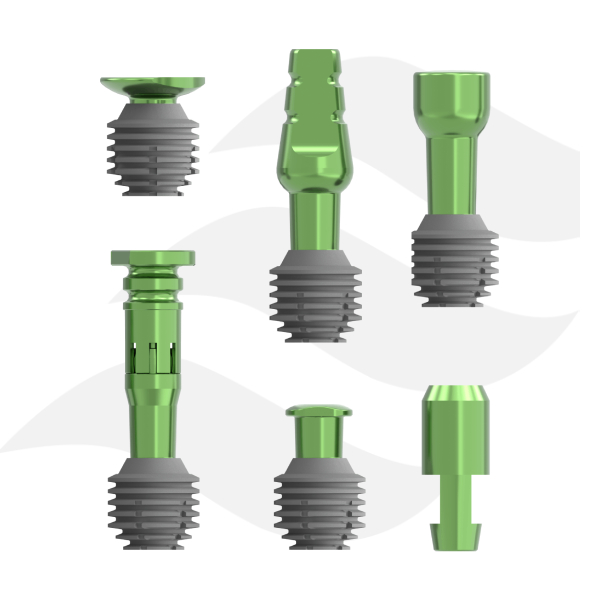
In the field of dental implantology, there are countless implant brands on the market, but only a handful are truly memorable to both clinicians and patients. Bicon is one of them.
It did not gain recognition through aggressive marketing, but through a design philosophy that challenges conventional thinking. While nearly every implant system relies on screws to secure the abutment, Bicon takes a different approach: it doesn’t use screws at all.
This is not a marketing gimmick. Instead, it is based on a unique connection mechanism known as the Locking Taper. This design fundamentally changes how the implant and abutment are connected, making Bicon one of the most representative systems in the field of short dental implants.
For patients with limited bone volume or insufficient vertical bone height in the posterior maxilla, Bicon’s short implant concept is often a solution that cannot be ignored. However, this uniqueness also leads many clinicians and patients to ask the same questions when they first encounter the system:
- What exactly is Bicon, and why doesn’t it use screws?
- Without screws, is the connection really stable?
- Short implants are significantly shorter than conventional implants—can they provide reliable long-term results?
These are entirely reasonable questions. In fact, addressing these concerns has driven decades of technological development and clinical validation behind the Bicon system.
In this article, we will take a comprehensive and in-depth look at Bicon from four perspectives: its working principles, key advantages, clinical indications, and how it compares with traditional implant systems. Whether you are a patient exploring implant treatment options or a clinician evaluating a new implant system, this guide will provide clear and practical answers.
What Is the Bicon Implant System?
In the world of dental implants, there are hundreds of brands available, but only a few are instantly recognizable. Bicon is undoubtedly one of them. Originating from the United States and headquartered in Boston, Massachusetts, Bicon is one of the most distinctive names in implant dentistry. However, if you think it is simply “another American implant brand,” you would be underestimating what makes it unique. At its core, Bicon represents an entirely different implant philosophy—one that fundamentally rethinks two critical questions: what an implant should look like, and how an implant should connect to its abutment.
The story began in 1985. Bicon’s founder, Dr. Thomas Driskell, was a pioneer in the field of dental implantology in the United States. At that time, the industry’s dominant mindset was straightforward: longer implants were better, tighter screws meant greater stability, and when there was insufficient bone, bone grafting was performed before implant placement. Dr. Driskell saw things differently. He proposed an idea that seemed bold—even unconventional—for its time: instead of focusing on making implants longer, what if implants were made shorter, and the implant-abutment connection relied on an entirely different mechanism rather than screws? Could this approach spare many patients from undergoing additional bone grafting procedures? This concept became the foundation of everything Bicon would later develop.
Beginning in the mid-1980s, Bicon devoted its efforts to the development and clinical validation of short dental implants. Nearly four decades later, it has evolved from what many once considered a niche alternative into one of the benchmark systems for short implant treatment worldwide. Today, Bicon products are used in more than 80 countries and regions, with millions of implants placed globally. In the United States, it was among the first short implant systems to receive FDA clearance. Across Europe, Asia, and the Middle East, it has built a strong reputation supported by a loyal clinical user base and extensive scientific literature. Its adoption is particularly high in challenging situations such as limited posterior maxillary bone height, graftless treatment for elderly patients, and immediate implant placement with immediate restoration. These achievements were not built through advertising campaigns, but through decades of accumulated clinical evidence.
So where exactly does Bicon fit within the implant industry? If the implant market were a race track, most brands would be competing in the same lane—developing longer implants, more sophisticated screws, and increasingly advanced surface treatments. Bicon chose a completely different lane. Its philosophy can be summarized by two key concepts: Locking Taper and Short Implants.
The first is Bicon’s proprietary locking taper connection technology, which completely eliminates the need for an abutment screw. Instead, the abutment and implant are secured through tapered friction locking, creating a connection with cold-weld-like sealing and retention without the use of any screw. The second is its signature short implant design. While conventional implant systems commonly use implants ranging from 10 mm to 14 mm in length, Bicon implants are often only 6 mm or 8 mm long. Despite their shorter length, numerous clinical studies have demonstrated survival rates comparable to those of longer implants.
Together, these two innovations form the complete foundation of the Bicon system. Rather than making incremental improvements within the traditional implant framework, Bicon offers an entirely different solution based on a different set of principles. Understanding this distinction is the first step toward truly understanding what Bicon is. Next, we will take a closer look at these two core technologies, exploring how they work and why they have consistently proven themselves in clinical practice.
What Are the Components of a Bicon Implant?
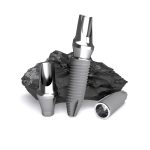
At first glance, a Bicon implant looks almost the same as most implant systems on the market. It is also made up of three core parts: the implant, the abutment, and the crown.
The implant is the titanium fixture placed into the alveolar bone. It bears chewing forces and acts as an artificial tooth root.
The abutment is the intermediate component that connects the implant to the crown. It works like a “bridge,” transferring force from the crown to the implant.
The crown is the final “artificial tooth” that patients can see, and it is also the part most closely related to aesthetics and function.
All three parts are present in the Bicon system, and structurally, it is the same as a traditional implant system.
But the real question is: how are these parts connected?
In traditional implant systems, the abutment and implant are fixed together by tightening a small screw. This screw may look insignificant, but it is one of the weakest links in the entire system. This is exactly where Bicon makes a fundamental change.
Bicon removes the abutment screw and replaces it with a connection method called Locking Taper.
From the outside, you can hardly see the difference. But this “invisible difference” is what gives Bicon its major advantage in long-term stability.
To truly understand why Bicon can work without screws, we need to look closely at its core technology: the Locking Taper connection.
Bicon’s Core Technology: Locking Taper Connection
If there is only one term you remember from this article, it should be this: Locking Taper.
It is the foundation of all Bicon’s technical advantages and the most fundamental difference between Bicon and almost every other implant system on the market. Without understanding Locking Taper, it is impossible to truly understand Bicon.
What Is Locking Taper?
Locking Taper, also known in mechanical engineering as Morse Taper, refers to a tapered locking connection.
The principle is not complicated.
Imagine two tapered metal parts: one male cone and one female cone. When the male cone is inserted into the female cone, the tapered surfaces generate strong friction.
The more precise the taper and the closer the contact between the surfaces, the greater the friction and the stronger the locking effect.
No screws, adhesives, or additional fixing parts are needed. A highly stable connection can be achieved through geometry alone.
This is how the Bicon abutment connects to the implant.
The bottom of the Bicon abutment is a precisely machined tapered structure, while the top of the implant has a matching tapered interface. When the abutment is pressed into place, the two tapered surfaces fit tightly together and instantly create a cold-weld-like locking force.
In mechanical engineering, Morse taper is widely used in high-precision, high-stability connections such as machine tool spindles and drill chucks. Bicon brought this engineering principle, proven for more than a century, into dental implantology.
The result is a screwless connection that can be even more stable than a screw-retained one.
What Is Cold Welding?
When the two tapered surfaces of the Locking Taper fit perfectly together, they create a phenomenon known as Cold Welding.
“Cold welding” does not mean actual welding. It refers to two clean metal surfaces coming into extremely close contact under high pressure, bringing the atoms close enough to create a molecular-level bonding force similar to welding.
In the Bicon connection, although the conditions are not the same as true industrial cold welding, the effect is very close.
There is almost no gap between the abutment and the implant, leaving little room for bacteria to enter or fluids to penetrate.
What does this mean?
- No micro-gap → bacteria cannot enter through the connection → the risk of peri-implantitis is greatly reduced.
- No micro-movement → osseointegration is more stable → long-term survival is more reliable.
This is why Bicon can claim that its connection achieves a “bacteria-tight seal.” It is not achieved through materials or coatings, but through the physical structure itself.
This is the second layer of protection provided by Locking Taper, and it is something traditional screw connections can never truly achieve.
Why Doesn’t Bicon Need an Abutment Screw?
To answer this question, we first need to look at the problems associated with abutment screws in traditional implants.
In most implant systems, the abutment is fixed by inserting a small screw, usually only 1–2 mm in diameter, into the implant. Although this screw is small, it is one of the most problem-prone parts of the entire restorative structure:
- Screw loosening: under repeated chewing forces, the screw may gradually loosen, causing the abutment to shift or even detach.
- Screw fracture: although uncommon, once it happens, removing the broken screw can be a very difficult clinical procedure.
- Screw channel space occupation: the screw access hole requires a certain amount of vertical space, which directly reduces the restorative space for the crown, especially in short implant cases.
- Micro-gap issues: tiny gaps naturally exist between the screw and the threads, creating a “highway” for bacterial invasion.
Bicon simply removes this screw.
Without a screw, there is no risk of screw loosening. Without a screw, there is no possibility of screw fracture. Without a screw, there is no screw channel occupying restorative space.
In its place is the friction locking of the Locking Taper—a fixation method achieved purely through geometry, without relying on any fastener.
For clinicians, this means fewer postoperative complications and lower maintenance costs.
For patients, it means fewer follow-up visits, lower long-term risk, and an implant that can truly be placed with less worry afterward.
This is the core technical logic behind Bicon: replacing parts with structure, replacing mechanics with geometry, and replacing “something that might cause problems” with “something that is simply not needed.”
Next, we will take a deeper look at another signature technology of Bicon: the Short Implant design, and see how it works together with Locking Taper to form the complete technical foundation of the Bicon system.
How Is Bicon Different from Traditional Dental Implants?
Now that we have looked at Bicon’s core technology in detail, let’s return to a more practical question: how is Bicon actually different from the traditional dental implants we commonly see?
The answer is simple: they may look almost the same on the outside, but their internal logic is completely different.
From a patient’s perspective, the final result may look similar: a titanium implant supporting a dental crown. But from a clinician’s perspective, these two systems follow completely different approaches in terms of connection design, long-term maintenance, and the risk of complications.
The key differences can be seen clearly in the table below:
| Comparison Item | Bicon | Traditional Dental Implants |
|---|---|---|
| Connection Method | Locking Taper | Screw-retained connection |
| Abutment Screw | No | Yes |
| Micro-gap | Extremely small, close to zero | Present and unavoidable |
| Bacterial Leakage | Lower, with a bacteria-tight seal | Relatively higher, as the micro-gap can become a bacterial pathway |
| Screw Loosening | Not an issue | May occur, especially over time |
| Maintenance Needs | Lower, with strong long-term stability | Higher, with regular screw checks often needed |
At this point, you may wonder: does this mean traditional implants are not good?
Not at all.
It must be made clear that traditional implant systems have developed over several decades and also show very high clinical success rates. In most routine cases, they perform extremely well. The difference between Bicon and traditional systems is not a difference between “good” and “bad,” but a difference in design philosophy.
The logic of traditional systems is to pursue stability through more precise screws, better surface treatments, and longer implants.
The logic of Bicon is to solve the problem through the structure itself, removing the possibility of failure in areas where problems could otherwise occur.
One approach is to make the component better. The other is to eliminate the component altogether. Both paths can lead to successful outcomes, but they follow completely different routes.
Once you understand this difference, you can better understand one of Bicon’s most representative features: the short implant.
Why Can Bicon Use Short Implants?
If Locking Taper is the soul of Bicon, then the Short Implant is its calling card.
In the field of dental implants, Bicon was one of the earliest and most committed brands to make short implants a mainstream treatment option. While other brands were competing to make implants longer, Bicon asked a different question: do implants really need to be that long?
What Is a Short Implant?
First, let’s establish a basic reference point.
Most dental implants on the market are usually between 8 mm and 13 mm in length, with some reaching 14 mm to 16 mm. This has long been the industry’s default standard. The common belief was that the longer the implant, the larger the bone contact area, and therefore the more stable it should be.
Bicon implants, however, are different. Their common lengths are only 5 mm and 6 mm, with the longest usually being 8 mm.
When most people first hear these numbers, they have the same reaction: is that really long enough to be stable?
That reaction is completely understandable. In most people’s minds, “short” naturally suggests “not deep enough” and therefore “not stable enough.”
But in reality, short does not mean weak. Bicon short implants have been repeatedly validated in clinical studies, with survival rates showing no statistically significant difference from traditional longer implants.
They may look shorter, but that does not mean they are less stable. This is made possible by three key design factors.
Why Can Short Implants Work Successfully?
The success of short implants is not based on luck. It is supported by three structural advantages.
First, Bicon uses a wide-body design.
Although Bicon implants are short, their diameter is not small. In some cases, they are even wider than many longer implants. A wider implant provides a larger bone contact area, using horizontal width to compensate when vertical bone height is limited. It is like comparing a short, thick pillar with a tall, thin one. In certain situations, the shorter and wider pillar may actually be less likely to tip over.
Second, Bicon short implants are designed to distribute stress more effectively.
Their design helps spread chewing forces more evenly around the surrounding bone rather than concentrating force at the implant tip. This means the pressure on the bone is more evenly distributed and easier to control, reducing the risk of bone resorption.
Third, the Locking Taper connection itself provides exceptional stability.
Remember the cold-weld-like effect we discussed earlier? There is almost no gap or micro-movement between the abutment and the implant. This means that even if the implant itself is short, the restoration above it is less likely to generate additional leverage caused by connection loosening. The more stable the connection, the less dependent the system becomes on implant length.
More importantly, many people overlook one key biomechanical fact:
In the posterior region, chewing force is mainly concentrated near the crest of the alveolar ridge, not deep inside the bone.
In other words, the implant does not simply need to go deeper. It needs to engage the area of bone where force is most concentrated. Bicon short implants are designed precisely with this principle in mind.
It is not that longer implants are always better. The best implant is the one placed in the right position.
What Are the Clinical Advantages of Short Implants?
After understanding the principle, let’s look at the clinical side. Which patients benefit most from short implants?
The answer mainly includes four types of patients.
1. Patients with Limited Bone Height in the Posterior Maxilla
This is the classic indication for short implants. The bone in the posterior maxilla is naturally thinner than in the mandible. Many patients only have 5–6 mm of bone height, which is not enough for a traditional implant longer than 10 mm. In the past, the usual solution was bone grafting first, waiting several months, and then placing the implant. With Bicon short implants, it may be possible to complete the treatment in one step.
2. Patients Close to the Maxillary Sinus
The maxillary sinus is located above the roots of the upper posterior teeth. Once bone resorption occurs, the sinus floor may drop lower. Traditional treatment often requires a sinus lift, which is more complex and involves a longer recovery period. A 6 mm Bicon short implant may avoid the sinus floor directly, without the need for sinus elevation.
3. Patients Close to the Inferior Alveolar Nerve
In the posterior mandible, an important nerve called the inferior alveolar nerve runs beneath the tooth roots. If an implant is too long, there is a risk of damaging this nerve, which may cause numbness in the lower lip. Because short implants have limited length, they naturally maintain a safer distance from the nerve.
4. Patients Who Do Not Want Bone Grafting
Bone grafting means an additional surgery, additional cost, extra waiting time, and more discomfort. For many elderly patients or those whose general health does not allow multiple surgeries, avoiding bone grafting whenever possible is a major benefit.
In essence, Bicon short implants were designed for cases that are difficult to solve with traditional treatment approaches.
They are not necessarily better than long implants in every situation. But in the specific situations mentioned above, they offer an answer that traditional systems often struggle to provide: successful implant placement without bone grafting.
What Are the Main Advantages of Bicon?
Now that we have covered how Bicon works and the technology behind it, let’s focus on a more practical question: what are the actual benefits of choosing Bicon?
So far, we’ve discussed how the system achieves its results. Now let’s shift the perspective to what those results mean for both patients and clinicians.
The answer can be summarized in five key advantages. None of them are marketing claims—they are supported by clear clinical principles and extensive research data.
Reduced Risk of Screw Loosening
This is perhaps the most obvious and easily understood advantage of Bicon.
In traditional implant systems, the abutment screw is usually only 1–2 mm in diameter, yet it must withstand chewing forces every day for years. Over time, screw loosening becomes less a question of “if” and more a question of “when.”
Once a screw loosens, the consequences can range from slight abutment movement to complete crown detachment. In more severe cases, a fractured screw can be extremely difficult to remove, sometimes requiring surgical intervention.
Bicon eliminates this risk at its source—because there is no screw.
The Locking Taper connection relies on tapered friction locking rather than screw retention. There is nothing to loosen and nothing to break. For clinicians, this means fewer restorative complications and less rework. For patients, it removes one of the most common long-term concerns associated with implant restorations.
Fewer mechanical complications naturally lead to a more predictable and worry-free treatment experience.
Reduced Bacterial Leakage
If screw loosening is a visible risk, bacterial leakage is the hidden threat.
In traditional implant systems, a micro-gap naturally exists between the abutment screw and the implant interface. Typically measuring between 10 and 50 microns, this gap is invisible to the naked eye but large enough for bacteria to enter.
The oral cavity is already a highly bacteria-rich environment. Once bacteria migrate through this micro-gap and colonize the implant interface, they may contribute to peri-implantitis, one of the leading causes of implant failure today.
The Locking Taper connection used by Bicon reduces this micro-gap to a near-zero level. The connection between the abutment and implant approaches a cold-weld-like seal, leaving virtually no pathway for bacterial penetration.
The smaller the micro-gap, the lower the bacterial leakage, and the lower the risk of peri-implant disease.
This is not a problem solved by antibiotics or mouthwash. It is addressed through structural design that blocks bacterial infiltration at its source.
Better Support for Soft Tissue Health
The success of an implant is not determined by bone alone. Healthy gum tissue is equally important.
Many people focus solely on osseointegration while overlooking another critical factor: the soft tissue seal. The ability of the gingiva to form a stable seal around the abutment directly affects both the long-term health and aesthetics of the restoration.
Bicon offers a natural advantage in this area.
Without an abutment screw, the abutment profile is smoother and more streamlined. This allows the gingival tissue to adapt more naturally around the abutment and establish a stable biological width. Without a screw access channel disrupting the design, soft tissue attachment tends to be more uniform and less prone to localized inflammation or recession.
This advantage is particularly noticeable in the anterior aesthetic zone.
When the gingival tissue remains stable, crown margins are less likely to become visible, inflamed, or discolored, resulting in a more natural-looking smile.
For patients who place a high value on aesthetics, this can be a meaningful benefit.
Reduced Need for Bone Grafting
This is perhaps the greatest clinical advantage provided by Bicon’s short implant concept.
As discussed earlier, Bicon implants are often only 5–6 mm long while still achieving survival rates comparable to those of longer implants. In practical terms, this means that many patients who would traditionally require bone grafting, followed by months of healing before implant placement, may be treated in a single stage.
The patients who benefit most include:
- Patients with only 5–6 mm of bone height remaining in the posterior maxilla. Traditional treatment often requires sinus augmentation or bone grafting, whereas a Bicon short implant may be placed directly.
- Patients whose implant sites are close to the inferior alveolar nerve. Short implants naturally maintain a safer distance from the nerve and may eliminate the need for nerve repositioning procedures.
- Elderly patients or those whose medical conditions make multiple surgeries undesirable. One less surgery means less risk, less discomfort, and a simpler treatment process.
Whenever bone grafting can be safely avoided, and whenever treatment can be completed in a single stage instead of multiple procedures, patients benefit. This is not about taking shortcuts—it is about selecting the most patient-friendly solution while maintaining clinical safety.
Proven Long-Term Clinical Stability
After discussing all these advantages, one question remains: does it actually work in the long term?
The answer is yes—and there is substantial clinical evidence to support it.
Bicon was among the earliest short implant systems to receive FDA clearance and has more than 30 years of clinical history. Over those decades, a large body of long-term follow-up research has been accumulated worldwide.
Multiple studies published in peer-reviewed journals have shown that Bicon short implants demonstrate survival rates comparable to traditional longer implants at five, ten, and even more years of follow-up.
This means that shorter does not represent a compromise. It represents a treatment concept that has been repeatedly validated over time.
Bicon’s long-term stability is not based on marketing claims. It has been established through decades of clinical performance and documented outcomes.
What Are the Limitations of Bicon?
After discussing the advantages, it is equally important to look at the other side of the picture.
No implant system is perfect, and Bicon is no exception. If you are considering Bicon, there are three limitations that should be clearly understood.
A Steeper Learning Curve
This is often the first thing clinicians notice when transitioning from traditional implant systems.
Bicon follows a different treatment philosophy. Without screws, clinicians cannot rely on the familiar feeling of tightening a screw to achieve retention. Instead, proper seating of the abutment depends on the correct engagement of the tapered connection, which requires a different technique and level of tactile experience.
In addition, Bicon has its own specific approach to osteotomy preparation that differs from many mainstream implant systems.
In simple terms, Bicon is not just another implant brand that can be used exactly like the others. It requires dedicated training and clinical experience.
This is one reason why the number of clinicians highly experienced with Bicon may be more limited in certain regions. The challenge is not the quality of the system itself, but the time and education required to master it.
A Smaller Market Presence
Compared with industry giants such as Straumann, Nobel Biocare, and OSSTEM, Bicon’s global market share is relatively smaller.
One consequence of this is that, in some regions—particularly outside North America and Europe—the number of clinics and clinicians offering Bicon treatment may be limited. Patients may have fewer provider options, and obtaining replacement components or restorative parts may not always be as convenient as with more widely distributed systems.
If only a small number of clinics in your area provide Bicon treatment, it is worth confirming the clinician’s level of experience and case volume before proceeding.
A smaller brand does not mean inferior technology, but limited clinical experience can certainly influence treatment outcomes.
Limited Compatibility of Restorative Components
This is an important consideration that both patients and clinicians sometimes overlook.
Bicon uses its own proprietary Locking Taper connection system. As a result, restorative components such as abutments, healing plugs, and prosthetic parts must be designed specifically for the Bicon platform.
While compatibility challenges also exist with traditional implant systems, screw-retained connections generally offer a wider range of component options. Bicon’s tapered connection is a more closed ecosystem, meaning that once the system is selected, restorative component choices remain within the Bicon platform.
This is not necessarily a disadvantage—it is simply the trade-off that comes with the design philosophy.
A dedicated system provides dedicated advantages, but it also sacrifices some flexibility. This is something that should be considered carefully during treatment planning.
Who Is a Good Candidate for Bicon?
No matter how advanced a technology may be, it is not the right solution for everyone. Bicon has clinical situations where it excels, as well as cases where other options may be more appropriate.
The following groups represent the most common indications for the Bicon system.
1. Patients Missing a Single Tooth
This is the most straightforward indication. Whether the missing tooth is located in the anterior or posterior region, Bicon can provide a stable and reliable restorative solution when adequate bone conditions are present.
In the aesthetic zone, Bicon offers additional advantages. Its screwless design and minimal micro-gap help support soft tissue health and contribute to more natural-looking aesthetic outcomes.
2. Patients Missing Multiple Teeth
Bicon can also be used successfully in cases involving multiple missing teeth, whether the edentulous spaces are adjacent or separated.
Its short implant concept allows clinicians to create multiple support points within limited bone volume, reducing the need for extensive bone grafting procedures.
3. Patients with Limited Bone Height
This is where Bicon demonstrates one of its greatest strengths.
For patients with only 5–6 mm of bone height remaining in the posterior maxilla, placing a conventional long implant may simply not be possible. In many of these situations, Bicon short implants can be placed directly, avoiding more complex bone augmentation procedures.
4. Patients Who Prefer to Avoid Bone Grafting
Some patients do not wish to undergo bone grafting because of age, medical conditions, personal preference, or the additional healing time involved.
For these individuals, Bicon short implants may offer the possibility of simplifying treatment and reducing the need for additional surgical procedures.
5. Patients Requiring Posterior Implant Restoration
Posterior teeth are exposed to the highest chewing forces and therefore place greater demands on implant stability.
The Locking Taper connection used by Bicon is highly resistant to micro-movement and loosening, making it particularly well suited for the biomechanical challenges of the posterior region.
It is important to emphasize that these are general indications only. The final treatment plan should always be determined by a qualified clinician after evaluating factors such as CBCT imaging, bone quality, bone volume, and occlusal conditions.
No implant system is suitable for every case, and Bicon is no exception.
Is Bicon Worth Choosing?
At this point, we can bring everything together.
So, what exactly is Bicon?
It is an implant system developed in the United States, but more importantly, it represents a complete treatment philosophy built around two core concepts: the Locking Taper connection and the Short Implant design.
Looking back at the key points discussed throughout this article, Bicon offers several distinctive advantages:
- Locking Taper Connection: By eliminating the abutment screw and using tapered friction locking, Bicon creates a cold-weld-like seal that helps reduce the risks of screw loosening and bacterial leakage.
- Short Implant Technology: With implant lengths as short as 5–6 mm, Bicon has demonstrated survival rates comparable to longer implants in numerous clinical studies, offering a valuable alternative for patients with limited bone volume.
- Soft Tissue Friendly Design: The absence of a screw access channel supports soft tissue stability and can contribute to improved aesthetic outcomes.
- Proven Long-Term Stability: With more than 30 years of clinical history and millions of implants placed worldwide, Bicon is not a new concept but a well-established treatment solution supported by extensive clinical evidence.
In cases involving limited bone volume, Bicon offers advantages that are difficult for many conventional systems to replicate. It has become one of the most recognizable screwless implant systems in the world, earning its reputation through technology and long-term clinical performance rather than marketing alone.
So, is Bicon worth choosing?
If sufficient bone volume is available, traditional implant systems remain excellent treatment options. However, if you are dealing with limited bone height, want to avoid bone grafting, or are particularly concerned about long-term maintenance, Bicon is a system that deserves serious consideration.
For clinicians already familiar with the Bicon philosophy, there are now increasing numbers of high-quality Bicon-compatible implants and restorative components available on the market in addition to original manufacturer products. These options provide greater flexibility in treatment planning and procurement, making it possible to balance both clinical performance and cost-effectiveness rather than choosing one at the expense of the other.
FAQ
Why Doesn’t Bicon Use Screws?
Because it does not need them.
Traditional implant systems secure the abutment to the implant with a screw. Bicon uses a completely different approach known as the Locking Taper connection.
The bottom of the abutment features a precisely machined tapered surface, while the implant contains a matching tapered socket. Once the abutment is seated, friction between the two surfaces creates a highly stable connection with a cold-weld-like effect.
Without screws, there is no risk of screw loosening, screw fracture, or loss of restorative space caused by a screw access channel.
It is not that Bicon cannot use screws—it is that the design makes them unnecessary.
Are Bicon Short Implants Safe?
Yes, provided they are used in the appropriate clinical situations.
Numerous clinical studies and long-term follow-up reports have shown that Bicon short implants, typically 5–6 mm in length, achieve survival rates comparable to traditional implants measuring 10–14 mm.
This is made possible by a combination of factors: a wide-body implant design that increases bone contact area, the exceptional stability of the Locking Taper connection, and biomechanical principles showing that chewing forces are concentrated near the crest of the alveolar ridge rather than deep within the bone.
That said, short implants are not suitable for every case. Their use should always be determined by a clinician after evaluating CBCT imaging and the patient’s individual bone conditions.
Which Is Better: Bicon or Traditional Dental Implants?
There is no single answer because the two systems are based on different design philosophies.
| Feature | Bicon | Traditional Dental Implants |
|---|---|---|
| Connection Type | Locking Taper, screwless | Screw-retained |
| Typical Implant Length | Primarily 5–8 mm | Primarily 8–14 mm |
| Main Advantages | No screw loosening, minimal micro-gap, reduced need for bone grafting | Broad indications, wider component availability, greater clinician familiarity |
| Clinical Success Rate | Strong long-term data, comparable to traditional systems | Excellent long-term data, extensively documented |
Both systems can deliver excellent clinical outcomes. The difference lies in how they solve clinical challenges.
For routine cases with sufficient bone volume, traditional implant systems remain an excellent choice. For patients with limited bone height or those seeking to avoid bone grafting, Bicon often offers distinct advantages.
Is Bicon Suitable for Patients with Limited Bone Volume?
This is actually one of Bicon’s greatest strengths.
Patients with only 5–6 mm of bone height in the posterior maxilla, sites close to the maxillary sinus, sites near the inferior alveolar nerve, or patients who prefer to avoid bone grafting are among the most common candidates for Bicon short implants.
Numerous clinical cases have demonstrated that many patients who would traditionally require bone grafting can be treated successfully with Bicon short implants, reducing additional surgery, treatment costs, and healing time.
If you have been told that bone grafting is necessary because of limited bone volume, it may be worth exploring whether a Bicon short implant approach could provide an alternative.
Can Bicon-Compatible Implants Be Used?
Yes.
Bicon-compatible implants are third-party implant systems and restorative components designed to match the Bicon Locking Taper connection standard. When the connection design fully conforms to the Locking Taper specifications and has undergone appropriate clinical validation, these components can be used with Bicon-compatible restorative solutions.
For clinicians, compatible systems may offer lower procurement costs, greater flexibility in component selection, and a more diverse supply chain.
For patients, this can provide a more cost-effective treatment option while maintaining the same clinical concept and restorative workflow.