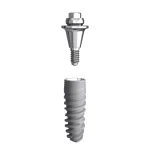
When patients hear the term “screwless dental implants,” they often imagine a dental restoration that magically stays in place without any physical connection. However, this is a common misconception. In modern implant dentistry, “screwless” does not mean the device lacks a connection structure; rather, it simply means there is no internal fixation screw holding the implant and the abutment together.
Instead of relying on tiny, threaded screws that can wear out over time, this innovative approach utilizes an advanced friction-based mechanism. The most prominent pioneer of this technology is the Bicon system, which is globally renowned for its unique locking taper (also known as a press-fit system). By precisely tapping the abutment into the implant fixture, it creates a highly secure, bacterially sealed connection.
What Are Screwless Dental Implants?
When exploring modern tooth replacement options, you might encounter the term “screwless dental implants.” By definition, these are advanced dental systems that completely eliminate the need for internal fixation screws. Instead of threading parts together, they utilize a locking taper or friction-fit connection to secure the dental restoration.
The most recognized pioneer in this field is the Bicon Dental Implants system, which has successfully utilized this innovative design for decades. This approach relies on precise engineering rather than traditional hardware.
The defining characteristic of this technology is straightforward: the implant-abutment is connected by friction, not a screw. This structural shift is revolutionary because it drastically reduces the common mechanical failures—such as loosening or breaking—associated with traditional threaded components.
Why They Are Called “Screwless”
The “screwless” label refers directly to the absence of the traditional connecting hardware that holds a standard implant together. It completely reimagines how the artificial tooth is anchored.
Here is what makes this system truly “screwless”:
- No abutment screw: There are no tiny threaded metal parts that can loosen, strip, or fracture under the heavy forces of daily chewing.
- No screw channel: Because there is no internal screw, the final crown does not require an access hole. This results in a much stronger and more aesthetically pleasing final tooth.
- Mechanical locking: The components are mechanically locked together purely through a precision-engineered tapered structure, creating an unyielding, gap-free bond.
How Do Screwless Dental Implants Work?
If there are no internal screws holding the pieces together, how does the artificial tooth stay permanently in place? The answer lies in the physics of a tapered locking and friction fit mechanism.
Instead of twisting an abutment into the implant like a lightbulb, the components are joined through a precise installation method. Once the abutment is properly aligned inside the implant fixture, the dentist applies a slight tapping force or controlled pressure to securely press-fit it into place.
This insertion creates a massive amount of friction between the two titanium surfaces. The fit is so exact that it generates a “cold weld effect.“ Essentially, the two separate pieces of metal fuse together on a microscopic level, creating exceptional stability and a bacterial seal without relying on threads.
The Locking Taper Mechanism Explained
The secret behind this unyielding connection is the brilliant engineering of the locking taper itself. The inner wall of the implant and the base of the abutment are expertly machined to feature a very shallow 1-2 degree taper design.
When these closely matched, gently angled surfaces are pushed together, the friction locking principle takes over. The insertion force is distributed evenly across the entire surface area of the taper, creating an incredibly tight, wedged seal.
This mechanism is exactly why it prevents loosening. Without a screw to vibrate, stretch, or unscrew during daily chewing, the restoration remains completely stable. In fact, the frictional bond is often much stronger than the natural biting forces attempting to separate it.
Step-by-Step Procedure
Getting a screwless dental implant is a streamlined, patient-friendly process. While individual treatment plans may vary, here is the standard progression:
- Implant placement into bone: The dentist carefully places the titanium implant fixture (the artificial root) into the jawbone below the gumline.
- Healing period: Over the next few months, a process called osseointegration occurs. The surrounding jawbone heals and fuses completely with the implant’s outer surface.
- Abutment insertion (press-fit): Once fully healed, the abutment is positioned and securely seated into the implant using the specialized tapping or press-fit technique.
- Final crown placement: Finally, the custom-made, lifelike dental crown is placed onto the abutment, instantly restoring the function and appearance of your smile.
Screwless Dental Implants vs Traditional Screw Implants
To fully grasp why screwless systems are changing the landscape of implant dentistry, it helps to compare them directly to traditional options. While traditional implants rely heavily on threaded hardware, screwless designs shift the entire burden of stability onto advanced structural engineering.
The chart below outlines how these two systems diverge across key clinical indicators:
| Feature | Traditional Screw-Retained Implants | Screwless (Locking Taper) Systems |
| Structural Mechanism | Employs an internal screw to thread and mechanically clamp the abutment to the implant body. | Relies on a 1-2 degree tapered friction lock that tightly wedges the components together. |
| Clinical Operation | Requires precise torque wrenches to screw parts together, which can risk thread stripping. | Utilizes a simple seating instrument with a light tapping force to press-fit the components. |
| Aesthetics | Features an access hole (screw hole) on the chewing surface that must be sealed with composite. | Completely seamless with no access hole, offering uncompromised structural strength and uniform aesthetics. |
| Maintenance & Repair | Easier to remove by unscrewing, but requires ongoing monitoring for loose or fractured screws. | More challenging to retrieve due to the cold weld effect, but virtually eliminates mechanical wear. |
Advantages of Screwless Systems
Choosing a screwless system offers several distinct clinical and practical advantages over conventional threaded hardware:
- Fewer components: By eliminating the internal abutment screw completely, the system minimizes the sheer number of physical points that can fail, fatigue, or break over time.
- No screw loosening risk: The mechanical locking taper cannot vibrate loose or back out under chewing forces, eliminating the number one mechanical complication of traditional implants.
- Better overall aesthetics: Without a dark screw channel piercing the crown, the final porcelain surface remains completely whole, uniform, and visually flawless.
- Simplified prosthetic design: Laboratory fabrication becomes highly streamlined because technicians do not have to account for complex internal hardware angles or screw access paths.
Potential Limitations
While highly innovative, screwless systems are not universal fixes and come with specific trade-offs that clinicians must consider:
- More complex retrievability: Because the friction fit can create a microscopic cold weld over time, removing a well-seated abutment for repairs requires specialized extraction tools and techniques.
- System-specific components: Doctors are locked into highly proprietary instrumentation and parts (such as those specifically manufactured by Bicon) to ensure the taper angles match perfectly.
- Learning curve for dentists: Moving away from wrench-tightened screws requires specific hands-on training to master the tactile, sensory-based “tapping” placement technique.
Are Screwless Dental Implants Safe and Reliable?
When considering a major shift in dental technology, safety is naturally a top priority. Decades of peer-reviewed literature demonstrate high long-term success rates in published studies, often proving to be just as reliable—and in some mechanical aspects, more reliable—than traditional systems.
The incredible stability of the locking taper comes from its immense surface-to-surface friction. Because there are no screws to loosen or micromove, it effectively creates a bacterial seal at the implant-abutment junction, protecting the surrounding crestal bone from inflammatory bone loss.
However, it is vital to remember that bone integration remains the critical factor for success. A screwless design is not a shortcut around biological realities; the implant fixture still must heal and fuse seamlessly with your jawbone (osseointegration) to handle daily biting forces.
Ultimately, screwless options are exceptionally safe, provided they are placed by an experienced clinician in an environment with sufficient bone volume or paired with appropriate short-implant protocols.
Who Is a Good Candidate for Screwless Dental Implants?
Screwless systems are highly versatile, but they excel in specific clinical scenarios where mechanical simplicity and high visual appeal matter most. You may be an ideal candidate if you fall into any of the following categories:
- Patients missing a single tooth or multiple teeth: This design seamlessly accommodates individual restorations as well as multi-unit fixed bridges without compromising strength.
- Patients with good bone quality: While locking taper systems are famous for utilizing short implants in low-volume bone, having healthy, dense bone drastically speeds up initial integration.
- Aesthetic zone cases (front teeth): For restorations near the front of the mouth, the total absence of dark screw holes ensures the tooth looks entirely natural from every possible angle.
- Patients concerned about screw loosening: If you want a low-maintenance solution without the persistent worry of internal hardware shifting, stripping, or requiring retightening down the road.
Which Brands Offer Screwless Dental Implants?
Although traditional screw-retained systems still hold a dominant share of today’s dental implant market, screwless dental implant systems are gaining significant traction among clinicians worldwide due to their unique mechanical structure and distinct biological advantages.
In this specialized niche, only a handful of brands have truly perfected the design through decades of clinical validation—and the most prominent representative is undoubtedly the true pioneer of the industry.
What is the Bicon Implant System?
When discussing screwless dental implants, the US-based Bicon Dental Implants is the absolute benchmark. As the undisputed pioneer system in this field, Bicon has built a successful clinical track record spanning over forty years since its introduction in 1985, completely revolutionizing how the industry views implant-abutment connections.
Its core competitiveness and design philosophy are driven by several key breakthroughs:
- 1.5° Locking Taper Patented Design: This is the absolute soul of the Bicon system. Instead of relying on a threaded screw, the abutment and implant are wedged together purely by friction via an incredibly precise 1.5-degree taper. This engineering feat not only withstands massive chewing forces but also creates a perfect bacterial seal at the interface, physically eliminating the micro-leakage and structural wear commonly seen in traditional screw components.
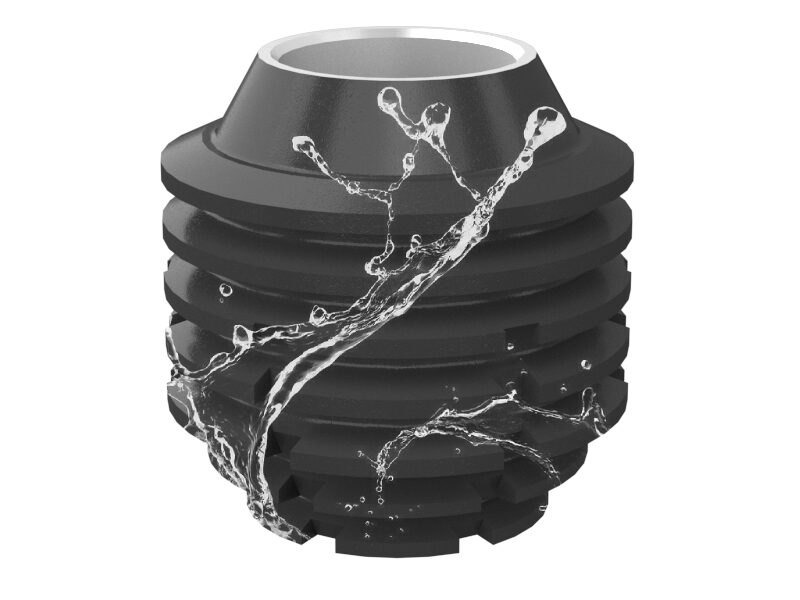
- Short Implant Options: Thanks to its unique fin-like plateau design (visible in the diagram), Bicon dramatically increases the surface area contact between the implant and the surrounding jawbone. This allows the system to offer highly dependable short implants measuring as small as 5.0mm or 6.0mm, which consistently demonstrate exceptional stability even in highly compromised bone sites.
- Widely Used in the US and Europe: Backed by decades of rigorous, peer-reviewed clinical follow-up data and proven mechanical stability, the Bicon system is widely used across premium dental practices, academic institutions, and implant specialties throughout the US and Europe.
- Focus on a Minimally Invasive Approach: From its inception, the system has been entirely dedicated to promoting a minimally invasive treatment philosophy. Because short implants perform so reliably, clinicians treating patients with severe bone resorption can frequently bypass complex, highly invasive bone-grafting procedures like sinus lifts or Guided Bone Regeneration (GBR). This drastically minimizes post-operative swelling, lowers surgical risks, and significantly shortens the overall treatment timeline for the patient.

The core engineering features of the Bicon locking taper implant system.. Source: ResearchGate
Bicon-Compatible Implant Alternatives
While the Bicon system is one of the most well-known locking taper implant designs, it is not the only option available in this category. In recent years, Bicon-compatible implant systems have emerged as a practical alternative for dental clinics and distributors looking for cost-effective solutions while maintaining the same friction-fit concept.
These compatible systems follow the same core principle of screwless implant connection — using a locking taper design instead of a traditional abutment screw. This allows clinicians to achieve similar stability, aesthetics, and prosthetic flexibility without changing their clinical workflow significantly.
Common Myths About Screwless Dental Implants
Despite their proven track record, screwless dental implants are still surrounded by skepticism. Because threaded screws have been the dental industry standard for decades, many clinicians and patients harbor misconceptions about how a friction-based system holds up under real-world conditions.
Let’s debunk the three most common myths surrounding screwless implant technology:
- Myth 1: “No screw means weak” — FALSE. It is a common mistake to assume that a screwless connection lacks structural integrity. Traditional implant designs concentrate massive biting forces onto a few tiny, fragile metal threads, which frequently leads to screw fatigue or fracturing. In contrast, a locking taper distributes functional loads evenly across a 360-degree surface area, creating a highly rigid, uniform unit that handles stress exceptionally well.
- Myth 2: “They fall off easily” — FALSE. Some people worry that without a physical screw holding the abutment down, the crown will simply pop off while chewing. However, the engineering behind the 1-2 degree precision taper relies on friction-fit physics that actually tighten under functional loading. Once the microscopic cold weld effect takes place, the connection is so secure that specialized extraction tools are required to separate the components.
- Myth 3: “They are experimental” — An Outdated Misconception. Because screwless implants aren’t discussed as frequently in basic marketing, many assume they are a novel, unproven trend. In truth, this technology is backed by over 40 years of rigorous clinical data and peer-reviewed studies. Pioneer systems have been successfully placed in patients worldwide since 1985, proving that their long-term survival rates easily match or exceed conventional threaded alternatives.
FAQ
FAQ 1: Are screwless dental implants really screw-free?
Yes, they are completely free of internal fixation screws. In traditional systems, a tiny screw is required to connect the abutment to the implant fixture inside the bone. In a screwless system, this connecting hardware is entirely replaced by a precision-engineered locking taper (friction-fit). However, the implant itself, which is surgically placed into your jawbone to act as the tooth root, still remains securely integrated into the bone just like standard implants.
FAQ 2: How long do screwless dental implants last?
With proper oral hygiene and regular dental checkups, screwless dental implants can last just as long as traditional implants—often several decades or even a lifetime. Because the locking taper design eliminates the risk of screw loosening or snapping under chewing pressure, screwless systems actually experience fewer mechanical failures over time, contributing to exceptional long-term durability.
FAQ 3: Can screwless implants be removed?
Yes, they can be removed, but it requires a specific clinical technique. Because the friction-fit connection creates a microscopic “cold weld” over time, the abutment cannot simply be unscrewed. If a crown or abutment needs to be replaced or repaired, the dentist must use specialized extraction instruments designed to safely break the frictional seal without damaging the surrounding bone or the implant fixture itself.
FAQ 4: Is Bicon better than traditional implants?
There is no universal superiority; it entirely depends on the specific clinical case. The Bicon system excels in cases with limited bone height (thanks to its short implant options) and in front-tooth aesthetic zones where missing screw holes are a huge advantage. However, traditional implants may still be preferred by clinicians who favor standard retrievability or when treating complex, full-arch cases that align better with threaded components.
FAQ 5: Do screwless implants cost more?
Generally, the cost of screwless implants is similar to or slightly higher than traditional options. Any price premium is usually due to the system’s specificity, specialized proprietary components, and the advanced clinical training required to place them. However, many patients find that they save money in the long run because they don’t have to pay for follow-up appointments to retighten or replace loose internal screws.
Conclusion
Screwless dental implants represent a modern evolution in implant dentistry, offering a different approach from traditional screw-retained systems. Instead of using an abutment screw, these implants rely on a locking taper or friction-fit connection, which creates a stable mechanical bond between the implant and the abutment.
Among these systems, the Bicon implant design is one of the most recognized examples, widely used for its simplicity, reduced component complexity, and strong long-term stability. By eliminating the need for screw channels, screwless systems can also provide improved aesthetics and potentially lower the risk of screw loosening-related complications.
For dental professionals, screwless implants offer an alternative workflow that emphasizes precision, minimal components, and efficient prosthetic design. At the same time, it is important to understand that success still depends on proper case selection, surgical technique, and osseointegration.
In addition, compatible systems have expanded the available options in this category, giving clinics and distributors more flexibility when selecting implant solutions that follow the same locking taper principle.
Overall, screwless dental implants are not a replacement for traditional systems, but rather an alternative design philosophy in implant dentistry—one that continues to gain attention for its simplicity, stability, and clinical efficiency.