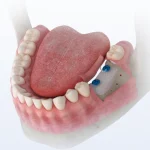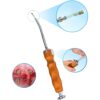

In dental implantology and GBR (Guided Bone Regeneration) procedures, decortication—creating small perforations in the cortical bone—is a simple yet extremely important step. Whether performing horizontal augmentation, vertical augmentation, or repairing large bone defects, clinicians routinely drill multiple small holes in the cortical bone of the recipient site to stimulate new bone formation.
But why is this necessary?
Is it always required?
And what exactly do decortication holes improve?
This article provides a clear, professional, and easy-to-understand explanation of the role and importance of decortication in bone augmentation.
Core Function of Decortication:
Creating a Critical Blood Supply Bridge Into the Augmentation Area
Within the complex structure of bone, different regions vary significantly in their blood supply. Cortical bone, the dense outer layer, is hard and compact by nature. This structure gives it inherently poor vascularity—much like a narrow, congested road that struggles to deliver the nutrients and oxygen needed by surrounding tissues.
In contrast, cancellous bone is porous and sponge-like, containing a rich vascular network capable of efficiently providing nutrients to itself and adjacent tissues.
Decortication acts as a series of “access windows” opened through the otherwise impermeable cortical bone. Its primary purpose is to break through this rigid barrier so that the abundant blood from the cancellous bone can seep out and flow directly into the grafting area, bringing vitality to the augmentation site.
This strategic step produces several important biological benefits:
- The influx of blood promotes the formation of a stable blood clot, which serves as the foundational scaffold for bone regeneration.
- The blood clot attracts and brings osteogenic cells into the grafted area—these cells are the essential builders responsible for new bone formation.
- Blood also carries key growth factors such as BMP and PDGF, which stimulate cell proliferation and differentiation, further enhancing tissue regeneration.
- With sufficient vascular support and biological activity, bone healing proceeds significantly faster, improving treatment outcomes.
Decortication creates a vital “vascular channel” that delivers life-sustaining blood to the grafted region. Without adequate blood supply, bone graft material cannot remodel or transform into new bone. With proper blood flow, however, the graft becomes biologically active, remodels effectively, and ultimately integrates into healthy new bone tissue.
Enhancing the Success Rate of Bone Augmentation and the Quality of Newly Formed Bone
In the fields of oral implantology and bone augmentation, improving the success rate of augmentation procedures and ensuring the formation of high-quality new bone have always been central concerns shared by both clinicians and patients. A substantial body of rigorous research has revealed a key insight: performing decortication (nutrient channel creation) during bone augmentation has a remarkably positive and significant impact on new bone formation.
From a microscopic perspective, bone growth and repair depend heavily on an adequate blood supply—much like plants cannot grow without sunlight and water. Decortication functions as a precisely created “vascular access channel,” improving blood flow into the augmentation site and bringing several biological advantages.
Increased New Bone Formation
A sufficient blood supply delivers abundant nutrients and essential growth factors to the augmentation area. These biological components act as both the “building material” and the “biological catalyst” for osteogenesis. They stimulate osteogenic cell proliferation, leading to a notable increase in the amount of newly formed bone. Just as vegetation thrives and expands when provided with sufficient water and fertilizer, an enriched blood supply promotes more robust and extensive new bone formation. This increase in bone volume contributes to a more complete and stable bone structure, laying a solid foundation for subsequent procedures such as implant placement.
Improved Bone Density
Blood flow not only delivers nutrients but also transports critical minerals such as calcium and phosphorus—key components for bone mineralization. With enhanced vascularity through decortication, these minerals can be deposited more effectively into the newly forming bone, resulting in significantly improved bone density. High-density bone resists compressive and mechanical forces more effectively, reduces the risk of fractures, and provides a more stable and reliable support environment for dental implants.
Accelerated Bone Maturation
New bone formation is a complex and prolonged biological process involving multiple stages. An adequate blood supply effectively accelerates this progression by creating an optimal environment for osteoblast survival, differentiation, and maturation. As a result, immature bone transitions more rapidly into mature, functional bone tissue. Faster bone maturation allows patients to regain function sooner, shortens overall recovery time, and enhances treatment outcomes.
Improved Implant Stability (Especially in Two-Stage Implant Placement)
Implant stability is a critical determinant of success in oral implantology. In two-stage implant placement, insufficient bone volume or poor bone quality in the augmentation area can result in implant mobility or displacement. Through improved blood supply, decortication increases bone volume, enhances bone density, and accelerates bone maturation. Together, these biological improvements significantly enhance implant stability, ensuring more secure and predictable osseointegration—much like strengthening the foundation of a building to ensure long-term structural stability.
A Valuable Technique in Guided Bone Regeneration (GBR)
Decortication is particularly advantageous when used in guided bone regeneration procedures. It supports a more predictable and stable bone integration process by enhancing vascularization. Osseointegration—the intimate, stable connection between the implant surface and surrounding bone—is the hallmark of successful implant therapy. By improving blood flow, decortication provides optimal conditions for osseointegration, leading to stronger and more durable bone–implant contact. Additionally, it helps maintain vertical bone height during augmentation, an important factor in preserving facial contours and ensuring long-term implant stability. GBR performed with decortication effectively minimizes postoperative bone height loss and leads to more ideal clinical outcomes.
Improving the Interface Environment Between Bone Graft Material and the Recipient Site
In oral bone augmentation and related clinical procedures, the quality of the interface between the bone graft material and the recipient site plays a decisive role in the overall success and final outcome of treatment. Decortication—often overlooked by less experienced clinicians—serves as a highly influential step that markedly enhances this interface environment. It acts as an expert “micro-environment designer,” optimizing the conditions for the bone graft to integrate with the host bone.
Microstructural Modifications to the Cortical Bone Surface
Decortication is far more than the creation of small perforations; it induces beneficial microstructural changes on the cortical bone surface. Creating decortication sites is analogous to carefully roughening a smooth wall, thereby increasing surface texture. Although this change may appear subtle, it carries profound biological significance.
At the microscopic level, an untreated cortical surface is relatively smooth. When bone graft particles come into contact with such a surface, the interaction resembles tiny granules resting on smooth glass—adhesion is limited, and stability is compromised. After decortication, however, the cortical surface becomes irregular and textured, increasing the contact area between the bone graft and the host bone. Much like fine sand particles better adhere to sandpaper than to a polished surface, the bone graft can anchor more effectively into the micro-irregularities created by decortication.
In addition, the roughened surface generates greater friction. Once the bone graft adheres to this textured interface, the frictional resistance acts like an invisible stabilizing force, preventing displacement. During routine oral activities—such as chewing or speaking—multidirectional forces may dislodge poorly stabilized graft material. The increased friction from a decorticated surface helps counteract these external forces, providing a more secure and stable environment for the graft to function effectively.
By enhancing adhesion and reducing graft mobility, decortication promotes the formation of a stable augmentation space. This stable environment functions as a controlled “regenerative chamber,” supporting predictable graft remodeling and guiding new bone formation that more closely matches the structure and contour of the surrounding native bone.
Clinical Scenarios in Which Decortication Is Especially Critical
Vertical Bone Augmentation
Vertical augmentation is among the most technically demanding procedures, as it requires stable graft placement against gravitational and functional forces. Adequate adhesion between the graft and recipient site is essential. If the graft material lacks stability, downward displacement can occur, compromising the augmentation outcome. By increasing surface roughness, decortication enhances graft retention and provides a reliable foundation for vertical height gain.
Large Bone Defects
In cases involving extensive bone defects, a considerable volume of graft material must be placed. Large-scale reconstruction significantly increases the challenge of ensuring uniform contact and stability. Without adequate interface conditions, graft particles may loosen, shift, or even detach, jeopardizing the regenerative process. The improved surface environment created by decortication facilitates better integration across the entire defect, promoting consistent new bone formation and increasing the likelihood of successful defect restoration.
Areas With Thick Cortical Bone
Regions of thick cortical bone present unique challenges. Their dense and relatively avascular nature makes graft integration more difficult, and the naturally smooth cortical surface further limits graft adhesion. Decortication disrupts this unfavorable environment by introducing surface roughness and improving mechanical interlocking, thus enabling more effective graft retention and remodeling even in dense cortical regions.
In summary, by increasing cortical surface roughness and enhancing contact mechanics, decortication significantly improves the interface between bone graft material and the recipient site. Its role becomes particularly indispensable in vertical augmentation, large defect reconstruction, and areas with thick cortical bone—ultimately contributing to more predictable and successful bone augmentation outcomes.
Are Decortication Perforations Necessary?
In the field of oral bone augmentation and other procedures involving bone repair and reconstruction, the necessity of decortication is frequently discussed. In the vast majority of cases, the answer is yes—decortication is strongly recommended.
Clinical Situations in Which Decortication Is Virtually Essential
Extensive Horizontal Bone Augmentation
During large-area horizontal augmentation, a broad section of bone must be widened and reconstructed. One of the greatest challenges in this process is ensuring an adequate blood supply. Without sufficient vascularization, the grafted bone particles cannot obtain the nutrients and growth factors required for successful remodeling, making new bone formation compromised.
Decortication functions as a vital “vascular access route,” perforating the cortical layer to allow blood from the cancellous bone to seep into the augmentation site. This provides the graft with essential oxygen and nutrients and greatly enhances its ability to transform into mature bone. Without decortication, the predictability and quality of extensive horizontal augmentation are significantly reduced.
Vertical Bone Augmentation
Vertical augmentation aims to increase bone height—a procedure with even higher vascular demands. Graft particles not only face gravitational forces but also pressure and friction from adjacent soft tissues. Without robust blood supply, graft material may sink or shift downward, resulting in failure.
Decortication maximizes vascular contribution to the vertical augmentation space, providing the biological foundation required for stable vertical bone formation. In this context, decortication becomes an indispensable step.
Posterior Maxilla and Posterior Mandible
The posterior maxilla and posterior mandible often present with thick cortical bone. Although this dense cortical layer offers structural stability, it restricts blood flow, creating a relatively avascular environment.
In bone augmentation procedures in these regions, decortication increases cortical surface roughness, improves graft-host interaction, and enhances vascular penetration. This is particularly important for achieving successful integration on thick cortical surfaces. Therefore, decortication is generally considered essential in augmentations performed in the posterior jaws.
Situations in Which Decortication May Be Reduced or Omitted
Very Small Defects
For very small defects, the amount of graft material required is minimal, and the vascular demands are significantly lower. The local blood supply alone may be sufficient to support graft remodeling. In such cases, the number of perforations may be reduced, or decortication may be omitted entirely. Minor alveolar depressions, for instance, may heal effectively with simple graft placement and stabilization.
Sites With Excellent Local Blood Supply and Rich Marrow Content
When a defect is located in an area with abundant blood supply and generous marrow content, the site possesses strong inherent regenerative capacity. Bone marrow is rich in hematopoietic and mesenchymal stem cells, both capable of differentiating into osteoblasts.
In these circumstances, the graft can rely on existing vascular and cellular resources to remodel without requiring decortication. For example, young patients with high metabolic activity may experience satisfactory outcomes even without cortical perforations.
When Alternative Blood Supply–Enhancing Technologies Are Used (e.g., PRF Membrane Coverage)
Advances in regenerative medicine have introduced alternatives that promote vascularization. Platelet-rich fibrin (PRF), for example, contains concentrated platelets, growth factors, and fibrin networks that support healing and angiogenesis.
When PRF membranes are applied over the graft, they provide a biologically active scaffold and stimulate neovascularization. In such cases, the need for decortication may be reduced depending on the clinical scenario.
The Importance of Decortication in Routine GBR Procedures
In standard guided bone regeneration (GBR), performing decortication is almost synonymous with improving the success rate. GBR relies on placing bone graft material and a barrier membrane to guide bone regeneration. However, without reliable vascular support, graft remodeling is slow and unpredictable.
Decortication ensures access to the cancellous blood supply, enhances graft–host integration, accelerates new bone formation, and improves the quality of regenerated bone. Consistent clinical evidence supports the use of decortication in routine GBR to achieve more predictable outcomes.
Although decortication may be reduced or omitted in select circumstances, it remains essential in the majority of oral bone augmentation procedures—particularly large horizontal augmentations, vertical augmentation, and grafting in the posterior jaws. Its contributions to blood supply, graft stability, and the quality of regenerated bone make it a critical step in ensuring surgical success.
Conclusion
Based on the key roles that decortication holes play in bone augmentation surgery, they have become a standard operating procedure widely adopted by dental professionals around the world. The establishment of this standard practice is not accidental but the result of long-term clinical experience and scientific validation.
From a clinical perspective, numerous successful bone augmentation cases have fully demonstrated the effectiveness of decortication holes. By following standardized decortication protocols, clinicians can complete bone augmentation procedures more smoothly, improving treatment outcomes and patient satisfaction. At the same time, as medical technology continues to advance, the techniques for creating decortication holes are constantly being optimized, making the procedure more precise, safe, and efficient.
From a scientific research perspective, a large number of experimental and clinical studies have provided strong evidence supporting the importance of decortication holes. By comparing bone augmentation outcomes with and without decortication, these studies have explored the mechanisms through which decortication holes influence bone healing, further confirming their indispensable role in bone augmentation surgery.
As a fundamental step in successful bone augmentation, decortication holes facilitate the migration of osteogenic cells, increase the bone-forming rate of graft materials, enhance the quality of bone healing, and significantly improve the success rate of GBR. Together, these benefits provide a solid foundation for predictable bone regeneration. In the future development of oral medicine, decortication techniques will continue to play an important role, bringing better outcomes to more patients.
GBR kit — follow dentalssale.