In implant dentistry, the posterior maxilla often presents unique challenges due to insufficient bone height caused by alveolar bone resorption and the expansion of the maxillary sinus after tooth loss. When residual bone height is inadequate for standard implant placement, sinus lift surgery becomes an essential technique to ensure successful osseointegration and long-term stability of dental implants.
This article outlines the clinical strategies for maxillary sinus lift procedures, their principles, and the selection of appropriate techniques based on residual bone height.
What Is Maxillary Sinus Lift?
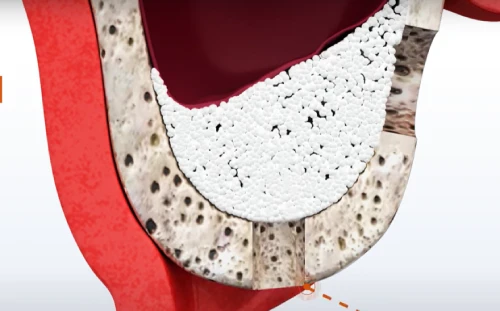
A maxillary sinus lift—also known as maxillary sinus floor elevation—is a surgical procedure designed to increase the bone height in the posterior maxilla by elevating the sinus membrane and augmenting the space beneath it.
It is indicated for patients with limited bone height due to sinus pneumatization or alveolar ridge resorption following tooth loss.
There are two main approaches:
- Crestal (Internal) Approach Sinus Lift—performed through the alveolar ridge, with minimal invasion.
- Lateral (External) Window Sinus Lift—performed by creating a small window on the lateral sinus wall for cases with severe bone deficiency.
The choice of technique depends primarily on the residual bone height (RBH):
| Residual Bone Height | Recommended Technique | Implant Placement | Description |
|---|---|---|---|
| >8 mm | Conventional Implant Placement | Immediate | Adequate bone height, no sinus elevation required. |
| 6–8 mm | Crestal (Internal) Sinus Lift + Simultaneous Implant | Immediate | Suitable for moderate bone deficiency; minimal invasion and quick recovery. |
| 4–5 mm | Lateral Window Sinus Lift + Simultaneous Implant | Immediate | For reduced bone height; requires bone grafting through lateral access. |
| <3 mm | Lateral Window Sinus Lift + Staged Implant | Delayed | Severe bone deficiency; bone grafting performed first, implant placed after healing. |
How Does Maxillary Sinus Lift Work?
The goal of a sinus lift procedure is to create additional vertical bone height by gently detaching and elevating the sinus membrane (Schneiderian membrane) from the sinus floor, forming a space that can then be filled with bone or bone substitute materials.
Depending on the technique, the process involves different working principles:
1. Crestal (Internal) Sinus Lift
This minimally invasive technique is performed through the alveolar ridge at the implant site.
- The osteotomy is prepared close to the sinus floor.
- Using special osteotomes or sinus lift instruments, the clinician gently fractures and elevates the sinus floor by percussion or hydraulic pressure.
- In some advanced systems, no bone graft is needed—the space itself promotes natural bone formation.
- Implants are often placed simultaneously.
Advantages:
- Less invasive and faster recovery;
- Reduced surgical time;
- Minimal postoperative discomfort.
Limitations:
- Suitable only when residual bone height ≥6 mm;
- Elevation height typically ≤3–5 mm.
2. Lateral (External) Sinus Lift
When residual bone height is <5 mm, the lateral approach is preferred.
- A small window is opened on the lateral sinus wall.
- The Schneiderian membrane is carefully lifted, and bone graft material is placed beneath it.
- Depending on the available bone height and primary stability, implant placement can be immediate or delayed.
Advantages:
- Allows for significant bone augmentation;
- Highly predictable results in severely resorbed maxillae.
Limitations:
- More invasive and requires longer healing time;
- Typically performed by experienced clinicians.
Clinical Decision-Making Strategy
A systematic approach is essential to select the most appropriate sinus lift technique:
- Evaluate with CBCT to assess bone height, sinus anatomy, and membrane thickness.
- Choose technique based on RBH:
- ≥8 mm → Direct implant placement;
- 6–8 mm → Internal sinus lift (crestal approach);
- 4–5 mm → External sinus lift (lateral window, simultaneous implant);
- <3 mm → External sinus lift (staged implant).
- Consider patient factors (bone density, sinus pathology, systemic health) and operator experience.
Innovations in Crestal Approach Sinus Lift
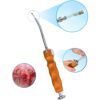
With continuous advancement in implant technology, the Improved Crestal Approach Sinus Lift Kit provides a safer, more efficient, and versatile solution.
Based on extensive clinical experience, the kit features precisely designed percussion instruments and depth-control stoppers, allowing sinus elevation to be safely performed in cases with 3–7 mm of residual bone height—without routine bone grafting.
Key Advantages:
- Precise control with adjustable stoppers;
- Wider indication range;
- Simplified workflow and reduced operation time;
- Enhanced safety and predictability.
Conclusion
The maxillary sinus lift technique plays a crucial role in restoring adequate bone height for implant placement in the posterior maxilla.
By selecting the appropriate approach based on bone conditions and clinical expertise, clinicians can achieve predictable, long-term results with minimal complications.
The improved Crestal Approach Sinus Lift Kit represents the next evolution of minimally invasive sinus elevation—offering surgeons enhanced control, safety, and efficiency, ultimately leading to superior outcomes and patient satisfaction.
We provide complete tool kits for all three sinus lift techniques mentioned in this article—Crestal (Internal) Sinus Lift, Lateral (External) Sinus Lift, and Advanced Percussion Sinus Lift Systems.
Dentists and clinics are welcome to contact us for more information or to place an order.