When performing restorations using the Nobel Biocare NP (Narrow Platform) implant system, many dentists encounter a practical question:
Is it absolutely necessary to use the original manufacturer’s impression coping?
Are there reliable compatible alternatives available on the market?
The answer is: Yes, there are.
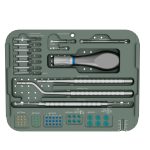
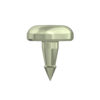
At present, high-precision impression copings that are compatible with the Nobel NP platform are already available.
When the correct system model is properly matched and standard clinical protocols are followed, these components can serve as a stable and reliable alternative to original manufacturer parts.
What Is the Nobel NP Platform?
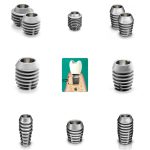
Nobel NP (Narrow Platform) is an implant system specification developed by the globally renowned implant brand Nobel Biocare, designed to address specific clinical needs.
Its core characteristic is a narrower implant neck diameter (typically 3.5 mm or less, depending on the product line). Owing to its refined design, it has become an important option in modern implant dentistry.
The primary clinical indications of the NP platform focus on three main categories:
1. Anterior Region Restorations
The anterior region places extremely high demands on implant concealment and esthetic harmony. NP narrow-platform implants help minimize trauma to the periodontal tissues of adjacent teeth while preserving more natural interproximal space for crown restoration. This reduces the risk of esthetic complications such as “black triangles” or excessively wide crowns, making NP implants particularly suitable for single-tooth or multiple-tooth restorations in the anterior zone.
2. Cases with Limited Bone Volume or Interdental Space
In situations where the horizontal width of the alveolar bone is insufficient (such as after bone resorption), or where interdental space is too narrow to accommodate a standard-diameter implant, the narrow-diameter design of the NP platform significantly reduces the risk of bone trauma during implant placement. In many cases, this eliminates the need for complex bone augmentation procedures, thereby simplifying treatment, shortening healing time, and improving overall clinical efficiency.
3. Implant Treatments with High Esthetic Demands
Beyond the anterior region, NP platforms are also commonly selected for visible areas such as the premolar region. The narrow cervical design more closely mimics the natural tooth profile. When combined with customized abutments, it allows for a more natural integration between the crown and the gingival tissues, enhancing overall esthetic outcomes and patient satisfaction.
Core Nobel Biocare NP Platform Series
Currently, the main NP platform series under Nobel Biocare include:
- Nobel Replace NP
A classic narrow-platform series featuring an external hex connection. It offers structural stability and strong compatibility, making it suitable for fixed restorations in routine cases with limited bone volume. - Nobel Active NP
Equipped with a dynamic self-cutting design and a distinctive tapered thread structure, this system adapts to varying bone densities during insertion, improving primary stability. It is especially well suited for anterior and premolar restorations in cases with thin bone or moderate bone quality. - Nobel Select NP
Designed with a focus on minimally invasive esthetic restorations, this series features an optimized, rounded cervical contour to reduce soft-tissue irritation and promote gingival healing. Its precision internal connection ensures accurate prosthetic positioning and long-term stability.
Important Clinical Considerations
Although all three systems fall under the NP (Narrow Platform) category, there are significant differences among them in terms of connection type (external hex vs. internal connection), cervical design, thread geometry, and abutment interface specifications.
These differences directly affect the compatibility of auxiliary components such as impression copings, healing abutments, and prosthetic abutments. Therefore, during clinical procedures, it is essential to accurately match the corresponding components to the specific NP series selected, in order to avoid compromised restoration accuracy or potential treatment failure due to component incompatibility.
Core Compatibility Factors for Nobel NP–Compatible Impression Copings
For the Nobel NP narrow-platform implant system, the core compatibility factors of compatible impression copings directly determine impression accuracy and the final restorative outcome. Strict technical standards must be met in the following dimensions:
I. Connection Structure
Exact matching of the interface type
The coping must strictly correspond to the connection type of the target NP series. Nobel Replace NP requires an external hex connection, while Nobel Active NP and Nobel Select NP require an internal or conical connection. The taper angle and hex dimensions must match the original manufacturer’s design on a 1:1 basis, with no visible gaps.
Fit and anti-rotation design
The connection surface must achieve a precise, stable fit without rocking or looseness. At the same time, it must incorporate the same anti-rotation features as the original components (such as slots or positioning pins) to prevent micro-rotation of the impression coping during the impression-taking process, which could lead to positional inaccuracies of the implant.
Consistency of seating depth
The insertion depth of the impression coping must be consistent with that of the original components to ensure accurate reproduction of the implant neck margin and surrounding soft tissue contours. Improper seating depth, whether too deep or too shallow, may result in marginal discrepancies of the final restoration.
II. Platform Dimensions and Manufacturing Precision
Accurate matching of NP platform diameter
The coping must be manufactured according to the specific cervical diameter of the corresponding NP series (for example, 3.3 mm or 3.5 mm in certain lines). Diameter tolerances should be controlled within ±0.02 mm to avoid compression of interproximal spaces due to oversizing, or excessive impression gaps caused by undersizing.
Strict control of machining tolerances
Surface roughness and geometric tolerances must comply with ISO standards for implant accessories. Particular attention should be paid to cervical fillets and shoulder dimensions, which must match the original design to prevent defects such as missing cervical margins or morphological distortion in the working model.
Material compatibility
Medical-grade titanium alloy or zirconia materials consistent with the original components are preferred. This ensures biocompatibility and prevents dimensional deformation caused by differences in thermal expansion coefficients during sterilization or impression material setting.
III. Retaining Screw System
Complete consistency of thread specifications
The thread profile, pitch, and length of the retaining screw must precisely match the internal threads of the corresponding NP series implant (such as the dedicated thread specification for Nobel Active NP). Risks such as thread stripping or screw binding must be strictly avoided.
Compliance with torque requirements
The coping must meet the original manufacturer’s torque specifications for the relevant NP system, typically ranging from 15 to 20 N·cm depending on the series. This ensures secure fixation without loosening during impression taking or damage to the implant’s internal threads due to excessive torque.
Compatibility of screw head design
The screw head slot type (such as cross-slot or internal hex) must be compatible with the original manufacturer’s dedicated instruments, ensuring smooth tightening and removal during clinical procedures and preventing tool slippage, component damage, or operational errors.
IV. Fit Verification and Clinical Validation
Precise adaptation to the specific NP series
Cross-series use is not permitted. For example, an external hex impression coping designed for Nobel Replace NP cannot be used with an internal-connection Nobel Select NP implant. The compatible series must be clearly specified, such as “compatible with Nobel Active NP series.”
Pre-clinical trial fitting
Before clinical use, a physical trial fit must be performed by installing the impression coping onto the corresponding NP implant analog. Seating smoothness, retention stability, and screw-tightening performance should be evaluated, and the component should only be used clinically after confirming the absence of abnormalities.
Verification of brand compatibility
Priority should be given to compatible brands certified by the original manufacturer or products supported by third-party testing reports. This helps avoid impression failure caused by dimensional deviations in non-standard components, which may subsequently lead to poor restoration fit or complications such as peri-implantitis.
Open Tray vs. Closed Tray Impression Copings
| Comparison Dimension | Open Tray Impression Coping | Closed Tray Impression Coping |
|---|---|---|
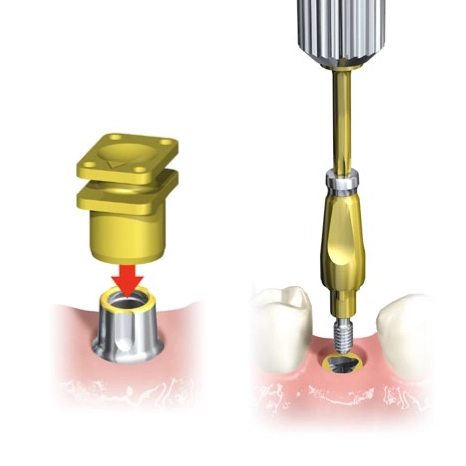
| Core Design | The coping is connected to the tray via a retaining screw. During impression taking, the screw must be removed first, and then the tray is separated from the coping (the coping remains in the impression). | The coping is independently installed on the implant. After the impression material sets, the impression is removed as a whole, and the coping detaches from the implant along with the impression. |
| NP Adaptation Key Points | Must match the corresponding NP series thread specifications and anti-rotation features. After tightening the screw, there should be no looseness to avoid positional deviations between multiple implants. | Relies on consistent seating depth of the NP platform. The coping neck must fit precisely against the implant collar to prevent displacement during impression taking. |
| Applicable NP Clinical Scenarios | 1. Multiple NP implant restorations (especially multiple anterior teeth, requiring precise reproduction of inter-implant distance); 2. Implants with angulation (common in narrow anterior NP implants, requiring high-precision directional control); 3. Cases with high esthetic demands (e.g., single anterior tooth needing precise cervical margin reproduction); 4. Cross-series NP implant restorations (e.g., mixed Replace NP + Active NP implants, requiring uniform precision standards). | 1. Single NP implant restoration (e.g., single missing anterior or premolar tooth, straight insertion); 2. Multiple NP implants aligned in a straight line with consistent angulation (no tilt, no deviation); 3. Rapid restorations in basic clinics (lower case complexity, efficiency prioritized); 4. Situations requiring minimal clinical chair time due to limited patient compliance. |
| Accuracy Performance | Micron-level positional reproduction, effectively mitigating error amplification risks due to the narrow NP diameter. Provides superior restoration fit. | Accuracy meets routine restorative needs, but requires higher consistency in implant angulation and spacing. Small deviations may occur if alignment is not precise. |
| Operational Complexity | More steps: install coping → tighten tray screw → take impression → remove screw → separate tray. Requires proficiency in workflow. | Fewer steps: install coping → take impression → remove impression. Easy for novice clinicians and can increase clinical efficiency by over 30%. |
| NP Accessory Requirements | Requires corresponding NP series long retaining screws (to accommodate tray thickness), with torque compliant with original specifications (15–20 N·cm). | No additional retaining accessories required. Only ensure the coping matches the NP implant connection type (internal connection or external hex). |
Three-Step Method for Selecting Nobel NP Impression Copings (Clinical Workflow Logic)
Step 1: Choose the type based on restoration complexity
- Prefer open tray when:
- Restoring two or more NP implants (regardless of linear alignment)
- Implant angulation > 5° (common in narrow anterior NP implants due to limited bone, requiring high-precision control)
- High esthetic demands in the esthetic zone (e.g., immediate anterior restoration, post-gingival shaping, requiring precise cervical margin reproduction)
- Complex occlusal relationships (e.g., deep overbite, crossbite, requiring high restoration fit accuracy)
- Prefer closed tray when:
- Single NP implant with straight insertion (angulation ≤ 3°)
- Single posterior tooth restoration (lower esthetic requirement, efficiency prioritized)
- Secondary restoration cases (implant position stable, no angulation deviation)
- Situations requiring reduced chair time (elderly or pediatric patients)
Step 2: Confirm NP series compatibility (avoid compatibility issues)
- Regardless of type, always confirm which NP series the impression coping is compatible with (e.g., “compatible with Nobel Active NP” or “compatible with Nobel Replace NP”). Cross-series use is not allowed.
- For open tray copings, additionally verify the thread specification of the retaining screw matches the corresponding NP implant internal threads to prevent stripping or binding.
- For closed tray copings, check that anti-rotation features (e.g., slots or positioning pins) match the NP implant to prevent rotation or displacement during impression removal.
Step 3: Adjust based on clinical conditions
- If clinic equipment is limited (e.g., no high-precision implant analogs), prefer closed tray (higher operational tolerance).
- If the patient has sensitive oral mucosa (e.g., gingivitis, oral ulcers), prefer closed tray (fewer steps, reduced mucosal irritation).
- For restorations requiring extremely high fit (e.g., all-ceramic crowns, zirconia bridges), even for a single NP implant, open tray is recommended to minimize marginal leakage risk.
III. NP Platform–Specific Considerations
- As the NP platform is narrow (cervical diameter 3.3–3.5 mm), the neck diameter tolerance of closed tray copings must be strictly controlled within ±0.02 mm; otherwise, excessive impression gaps may occur, affecting restoration fit.
- When using open tray copings for multiple NP implants, ensure all copings have consistent seating depth (matching original component standards) to prevent inter-implant spacing recording errors due to depth variations.
Clinical Precautions in Using Nobel NP–Compatible Impression Copings
In the clinical application of Nobel NP–compatible impression copings, attention should focus on three core principles: safe operation, accuracy assurance, and extended service life. Key details include:
Torque Control: Precise Matching with Original Standards
- Strictly follow the original manufacturer’s torque requirements for the corresponding NP series (typically 15–20 N·cm; refer to the implant manual for specific values) and use a calibrated torque wrench.
- Avoid overtightening: Excess torque may damage the coping threads, strip the implant internal threads, or cause component fracture during removal.
- Avoid undertightening: Loosening or displacement of the coping during impression taking can directly compromise impression accuracy, resulting in poor restoration fit.
Model Matching: Double-Check to Avoid Mismatch
- Preoperative verification: Confirm that the coping’s “compatible NP series” (e.g., Replace NP / Active NP / Select NP) and “type” (open tray / closed tray) exactly match the implant. Also check that the coping connection type (internal connection / external hex) and neck diameter are consistent with the implant.
- Intraoperative trial fit: After installing the coping, gently pull and rotate to test retention stability. Ensure no looseness or wobble, and confirm that seating depth and cervical margin fit meet requirements before proceeding.
- Avoid cross-series use: Even within the NP platform, copings from different series are not interchangeable. Mismatching may lead to impression failure or implant damage.
Sterilization and Disinfection: Compliance with Infection Control Standards
- Prefer high-temperature, high-pressure sterilization (134°C, 0.2 MPa, 18 minutes). Before sterilization, separate the coping from the retaining screw and remove any residual impression material, blood, or other debris.
- Avoid soaking in chlorine-containing disinfectants or acidic cleaning solutions, which may corrode titanium or zirconia and affect component accuracy and biocompatibility.
- After sterilization, store in a sterile environment to prevent secondary contamination, and inspect the component for stains, scratches, or deformation before use.
Reuse Management: Control Wear and Service Life
- Reusable copings: Record the number of uses (recommended no more than 10–15 times per set; follow the manufacturer’s guidance). Inspect key areas after each use, such as the connection surface for dents, thread smoothness, and integrity of anti-rotation features.
- Immediate replacement is required if: threads are worn leading to loose fixation, cervical margin is deformed, anti-rotation slots are severely worn, or the surface shows obvious corrosion or cracks.
- Single-use copings: Strictly avoid repeated sterilization or reuse, to prevent clinical risks from material fatigue or residual contamination.
Operational Details: Minimizing Impression Errors
- Open tray copings: Ensure the retaining screw passes through the tray hole and is fully tightened. During screw removal after impression taking, operate gently to avoid displacing the coping.
- Closed tray copings: Remove the impression vertically without lateral movement to prevent separation of the coping from the impression or distortion of the implant collar reproduction.
- Postoperative cleaning: Immediately remove any residual impression material from the coping surface (especially the threads and connection gaps) to maintain accuracy for subsequent use.
Suitable Clinicians for Compatible Copings
Nobel NP–compatible impression copings are not universal. They are better suited for clinical teams with the following needs or conditions, offering the core value of “accuracy uncompromised, cost optimized”:
- Clinics with high implant case volumes
- Institutions performing ≥5 Nobel NP implant cases per day or month: compatible copings can reduce consumable costs per case (typically 30–50% lower than original parts) while maintaining equivalent precision, leading to significant long-term savings.
- Clinics with standardized workflows: these clinics have mature NP system protocols and can precisely control coping matching and usage details, avoiding errors from improper handling.
- Clinicians with long-term Nobel NP experience
- Familiarity with connection structures and parameters of all NP series (Replace / Active / Select) enables rapid recognition of compatible copings and prevents mismatching.
- Clinicians focused on clinical efficiency: compatible copings follow the same operational logic as original components, requiring no additional learning, and can seamlessly integrate into existing workflows without reducing chairside efficiency.
- Teams pursuing balance between accuracy and cost
- Clinics emphasizing restorative quality: compatible copings have undergone strict compatibility testing, meeting impression requirements for routine and complex cases, ensuring restoration fit and long-term stability.
- Multi-site or chain clinics: unified procurement of compatible products allows standardized consumable management, reducing costs while maintaining consistent quality across locations.
- Teams performing esthetic implant restorations: high-end compatible copings use the same medical-grade materials and manufacturing processes as the original, meeting precision requirements for high-esthetic anterior restorations while controlling overall treatment costs.
Additional Adaptation Scenarios
- Clinics that need to maintain a range of coping sizes: compatible products typically offer broader model selection (covering the full NP platform series with open and closed tray options) and shorter lead times, enabling rapid response to various clinical cases.
Conclusion
For dentists using the Nobel NP platform,
selecting a suitable compatible impression coping is a mature, feasible, and widely accepted solution.
The key points are:
- Clearly identify the system model
- Verify the connection type
- Choose high-precision products with CE certification
Under these conditions, compatible components can fully meet the requirements of routine clinical restorations.