In the field of dental implantology, Nobel Biocare is undoubtedly regarded as an industry benchmark. As one of the earliest companies globally to focus deeply on dental implant research and development, its history can be traced back to the very origins of modern implant dentistry. In 1965, Professor Per-Ingvar Brånemark, known as the “father of modern implant dentistry,” performed the first titanium dental implant surgery, laying the foundation for the theory of osseointegration.
Through more than half a century of technological iteration and clinical validation, Nobel has accumulated extremely mature expertise in implant design, surface treatment (such as the classic TiUnite surface technology), and full-scenario clinical applications. Its product lines have become high-end solutions trusted by dentists worldwide, demonstrating particularly outstanding performance in complex clinical scenarios such as immediate implant placement and immediate loading.
However, in real-world clinical practice and dental clinic operations, dentists and clinic managers often face a practical consideration: while premium brands offer reliable quality, their consumable costs are relatively high and certain components may have longer supply cycles. This raises an important question—are there implant systems that are fully compatible with Nobel systems while offering greater advantages in cost control and supply flexibility?
The answer is yes. Based on market validation and clinical application, several professional implant brands have introduced products that are fully compatible with Nobel’s core systems. Among them, the most representative are:
DentalMaster DMDriving System — fully compatible with the Nobel Active series
DentalMaster DMEqual System — fully compatible with the Nobel Parallel CC series
Next, we will provide a detailed analysis from the perspectives of the core components of an implant system, the key strengths of the Nobel brand, the compatibility details between DentalMaster and Nobel, as well as the clinical value and applicable scenarios of compatible implant systems.
I. What Are the Core Components of a Complete Implant System?
Dental implant treatment is not a single procedure involving only an “implant fixture,” but rather a complete therapeutic system that requires precise coordination among multiple components. A mature implant system that can be applied safely and stably in long-term clinical practice must include a full set of core components. In addition, the dimensional accuracy, connection design, and operational logic of each component must be highly standardized and unified to ensure surgical safety, long-term stability, and optimal restorative outcomes.
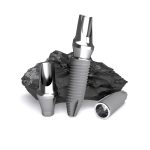
The core components of a complete implant system include:
- Implant:
The primary load-bearing component, which must exhibit excellent biocompatibility, osseointegration capability, and mechanical strength. Its surface treatment technologies (such as sandblasted and acid-etched surfaces or hydrophilic treatments) and thread design directly affect primary stability and the efficiency of osseointegration. - Abutment:
The critical component that connects the implant to the prosthetic restoration (crown). It must precisely match the implant’s connection interface to ensure even force distribution, while also meeting aesthetic restoration requirements. - Healing Abutment:
A transitional component used postoperatively to guide soft tissue healing and shape a physiologically appropriate gingival contour, laying the foundation for subsequent prosthetic restoration. - Cover Screw:
Placed after implant insertion to cover the top of the implant, preventing soft tissue or bone ingrowth into the internal connection and protecting the implant–abutment interface. - Analog / Temporary Abutment:
Used during the restorative phase for model fabrication, serving as a substitute for the clinical implant and abutment to ensure precise adaptation of the final prosthesis. - Surgical & Prosthetic Kit:
A complete set of instruments required for surgical placement and subsequent prosthetic procedures. Its operational logic and precision directly influence surgical efficiency and overall treatment safety.
It is important to emphasize that true “clinical compatibility” does not refer merely to dimensional matching of a single component. Rather, it requires full consistency across all key components in terms of dimensional accuracy, connection design (such as internal hex or Morse taper), and clinical workflows. This ensures that clinicians do not need to alter their established surgical or restorative protocols, while maintaining treatment outcomes equivalent to those of the original system.
II. Core Advantages of the Nobel Implant System: Why It Has Become the Industry Benchmark
Nobel has maintained its leading position in the global high-end implant market for many years and has become the primary benchmark for clinicians when selecting “compatible systems.” This status is fundamentally driven by five irreplaceable core advantages, which also represent the key elements that any truly compatible system must accurately replicate:
- Extensive clinical validation with traceable safety records
Backed by more than half a century of long-term, multicenter clinical data, Nobel implant systems demonstrate success rates exceeding 90% over more than 20 years of follow-up. Their performance has been thoroughly validated, particularly in complex bone conditions (such as insufficient bone volume) and special clinical scenarios. - Stable connection design ensuring long-term performance
Nobel utilizes high-precision connection structures (such as the tapered connection used in the Nobel Active series), offering excellent anti-rotational properties and sealing performance. This effectively reduces the risks of abutment loosening and bacterial infiltration, ensuring long-term implant stability. - Excellent primary stability suitable for diverse clinical scenarios
Through optimized thread design and advanced surface treatment technologies, Nobel implants can achieve rapid primary stability after placement. They are especially suitable for high-efficiency treatment protocols such as immediate implant placement and immediate loading, allowing patients to eat as early as three hours postoperatively. - A comprehensive product portfolio covering all treatment needs
From single-tooth replacement and multiple-tooth loss to full-arch rehabilitation, Nobel offers a multi-series product matrix including Nobel Active and Nobel Parallel CC. These systems accommodate varying bone qualities and restorative requirements, forming a complete workflow solution from implant placement to final restoration. - High global clinician recognition with comprehensive technical support
Nobel has established a robust global education and training network, providing clinicians with systematic technical training and clinical case support. Its technical standards have become one of the recognized “gold standards” in the field of dental implantology.
It is precisely because of these core strengths that the Nobel system has become the definitive benchmark for evaluating the compatibility and quality of other implant systems. Only systems that can accurately replicate Nobel’s core technical parameters and clinical workflows can truly achieve “clinically equivalent compatibility.”
III. DentalMaster and Nobel: One-to-One Full Compatibility, with Attention to Every Detail
DentalMaster is a professional brand dedicated to the research, development, and manufacturing of dental implant systems. With years of focused investment in implant technology, its core development philosophy is “high-end quality as the foundation, clinical adaptability as the core.” Based on this philosophy, DentalMaster has launched two implant systems that are fully compatible on a one-to-one basis with Nobel’s two core product lines: the DMDriving system (compatible with Nobel Active) and the DMEqual system (compatible with Nobel Parallel CC).
This “full compatibility” is not a simple imitation of dimensions, but a comprehensive match covering core technical parameters and clinical operating logic. The scope of compatibility includes the complete set of core components:
- Implants:
Dimensions (diameter and length), surface treatment technologies, thread design, and connection structures are fully consistent with the corresponding Nobel series, ensuring osseointegration efficiency and primary stability. - Abutments:
Connection interfaces, heights, and angulation options are fully compatible with Nobel systems and can be directly used with original or compatible prosthetic components. - Healing Abutments / Cover Screws:
Dimensional accuracy and installation methods seamlessly match Nobel systems, ensuring optimal soft tissue healing outcomes. - Analogs / Temporary Abutments:
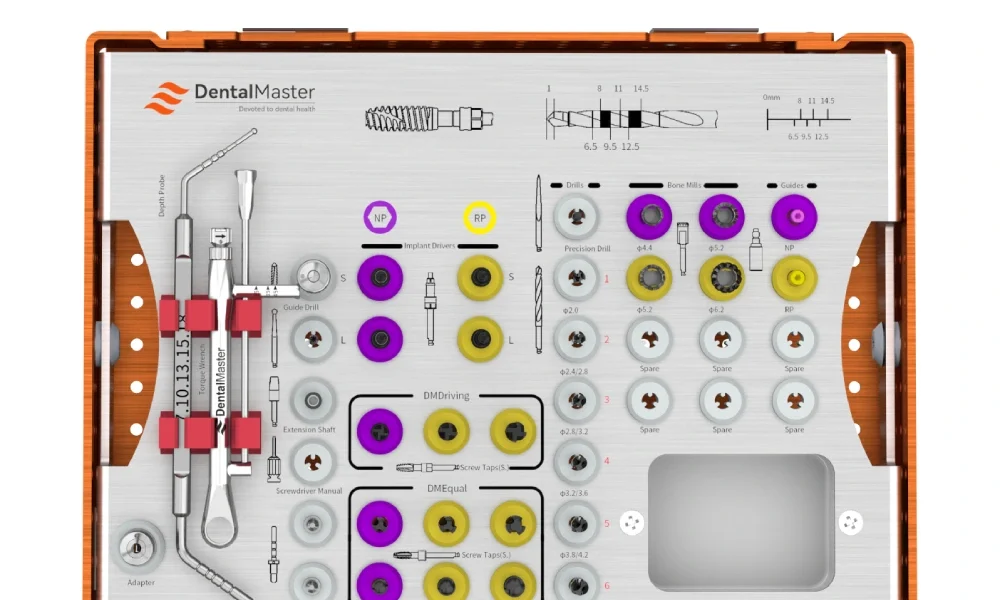
Precisely replicate the model adaptation logic of Nobel systems, ensuring accuracy during prosthetic fabrication. - Surgical and Prosthetic Kits:
Instrument handling, dimensions, and clinical workflows are fully consistent with Nobel systems, allowing clinicians to maintain their established operating habits with zero learning curve.
More importantly, DentalMaster products are not merely “low-cost replicas.” While ensuring compatibility, they strictly comply with international medical device quality standards and have obtained CE certification and ISO certifications (including ISO 13485 quality management system certification and ISO 10993 biocompatibility certification). They conform to European MDR regulations and international clinical application standards, ensuring product safety and reliability.
In terms of distribution, DentalMaster products are currently sold exclusively through the Dentalssale platform. This controlled distribution model effectively prevents counterfeit circulation, ensures product quality control, and provides clinics with more convenient procurement channels and after-sales support.
IV. Choosing a Compatible Implant System: Dual Value in Both Clinical Practice and Clinic Operations
For clinicians and dental clinics, selecting a DentalMaster system that is fully compatible with Nobel is not merely an “alternative option,” but rather a strategic choice that optimizes clinical efficiency, operational costs, and service flexibility—while maintaining treatment quality. Its core advantages are mainly reflected in the following five aspects:
1. Faster component replacement with seamless integration into clinical workflows
The core components of compatible systems can be seamlessly interchanged with original Nobel components without the need to modify restorative plans or clinical workflows. For example, when original Nobel components are temporarily out of stock, clinics can directly use corresponding DentalMaster compatible components, avoiding treatment delays caused by component shortages and improving the overall patient experience.
2. Full tool compatibility, reducing equipment investment costs
Implant tool kits represent a significant equipment investment for clinics, and original tool kits from premium brands are often costly. DentalMaster tools are fully compatible with Nobel systems, allowing clinics to avoid purchasing an entirely new set of instruments and instead only replenish essential consumables, significantly reducing equipment investment and maintenance costs.
3. Complete component availability, minimizing the risk of missing parts
DentalMaster offers a complete range of compatible components, from implants and abutments to various auxiliary parts, enabling one-stop procurement. This helps avoid treatment delays caused by shortages of less commonly used components and is especially suitable for clinics handling multiple cases across diverse clinical scenarios.
4. Significant cost savings, enhancing clinic profitability
While ensuring product quality and compatibility, DentalMaster consumables offer a cost advantage compared to original Nobel products. Clinics can effectively control the per-implant consumable cost without compromising treatment quality, while also reducing inventory pressure by avoiding the need to stock multiple sets of components for different brands. This significantly improves overall profitability and aligns closely with current industry cost-control requirements under centralized procurement policies.
5. Greater clinical flexibility, adapting to diverse operational scenarios
For clinics that use multiple implant brands, compatible systems enable “one set of tools, multiple brand compatibility,” simplifying clinical operations and inventory management. For clinics that primarily rely on Nobel systems, compatible systems serve as a backup and supplementary option, enhancing supply stability and clinical flexibility.
V. Which Clinicians and Clinics Are Compatible Systems Best Suited For?
Based on clinical application scenarios and operational needs, DentalMaster implant systems compatible with Nobel are not a “one-size-fits-all” solution, but they are particularly well suited for the following four types of clinicians and clinics, where their value can be maximized:
- Clinicians with long-term experience using Nobel systems
Clinicians who have long relied on Nobel systems have already established fixed operating habits and clinical workflows. Switching to a fully compatible DentalMaster system requires no retraining or adaptation to new tools, allowing rapid adoption while avoiding clinical risks associated with changes in operating techniques and ensuring consistent treatment outcomes. - Clinics seeking to control consumable costs
In the context of centralized procurement policies and increased patient price sensitivity, clinics must optimize cost structures while maintaining quality standards. DentalMaster compatible systems enable significant reductions in consumable procurement costs under the premise of qualified quality and clinical equivalence, helping clinics strike a balance between quality and pricing, enhance market competitiveness, and expand profit margins. - Medium-to-large clinics with multiple chairs and multiple clinicians
Such clinics often operate multiple chairs with several clinicians treating patients simultaneously and managing a wide range of case types. Compatible systems enable “one set of tools shared by multiple clinicians with multi-brand compatibility,” simplifying inventory management by eliminating the need to stock multiple toolkits and component sets. This improves workflow standardization and efficiency while reducing training costs for new clinicians. - Markets and clinics with high requirements for supply stability
Some premium brands experience long component lead times or regional supply instability, which can disrupt routine clinical operations. Through optimized supply chain management, DentalMaster offers more flexible component availability and shorter waiting periods. This makes it particularly suitable for clinics with high demands for supply stability, as well as those in remote areas or primary-level dental institutions.
Conclusion
There is no denying that Nobel Biocare, with its profound technological heritage, comprehensive clinical data, and global recognition, remains the “gold standard” in the field of dental implantology. Particularly in complex cases and high-end treatment scenarios, its core value is difficult to replace. However, with the increasing adoption of implant dentistry and the maturation of the industry, compatible systems characterized by high quality, high compatibility, and high cost-effectiveness are becoming an important choice for clinicians and dental clinics.
The DMDriving and DMEqual systems under the DentalMaster brand, through full compatibility with the Nobel Active and Nobel Parallel CC series, not only replicate the core technologies and clinical advantages of premium brands, but also achieve breakthroughs in cost control and supply flexibility. This enables clinicians to maintain treatment quality while gaining more efficient and controllable clinical solutions, and provides more patients with access to high-quality implant treatment at a more cost-effective level.
Looking ahead, the core trend in dental implantology will inevitably be “quality first, compatibility essential.” Choosing a clinically validated, regulation-compliant, and highly adaptable compatible implant system will become a key factor for clinics seeking to enhance their core competitiveness.