In modern implant dentistry, when dentists and dental laboratories discuss “Nobel implants,” they are usually referring to the globally recognized Nobel Biocare dental implant system. As a representative brand carrying forward the legacy of Professor Per-Ingvar Brånemark, the pioneer of modern implantology, Nobel Biocare has become one of the world’s most established premium implant brands, supported by decades of clinical evidence.
However, when facing complex bone defects and restorative requirements in daily clinical practice, many dentists and purchasing managers often ask several important questions: What makes Nobel implants different? What are the structural and clinical differences between its three major implant systems — NobelActive®, NobelParallel™ CC, and NobelReplace®? And when treating different clinical cases, how should the corresponding restorative components be selected accurately?
To help clarify these frequently asked questions, this article will provide a complete explanation from several key perspectives, including brand background, core structural technologies, clinical applications, system differences, compatible component selection, and purchasing recommendations for dental clinics. Whether you are a clinician looking for a reliable clinical solution or a dental laboratory professional focused on digital restorative precision, this guide will give you a systematic and practical understanding of Nobel implants.
What Are Nobel Implants?
When dental professionals discuss what Nobel implants are, they are referring to the comprehensive Nobel Biocare implant system. Rather than a single product, it is an advanced and highly integrated dental implant system designed to replace missing natural tooth roots and provide strong, long-lasting support for a single crown, a multi-unit bridge, or a complex full-arch restoration.
To fully understand the clinical value of Nobel Biocare, it is important to look at the history, evidence, and ecosystem behind the brand.
- 50+ Years of Clinical History: According to official Nobel Biocare information, the brand has more than 50 years of patient treatment history, tracing back to the pioneering osseointegration discoveries of Professor Per-Ingvar Brånemark.
- Scientific Evidence: The reliability of the system is supported by extensive research, with over 4,500 scientific publications covering its clinical performance, safety, and long-term marginal bone preservation.
- A Complete Ecosystem: Nobel Biocare is not only an implant fixture provider. It offers an end-to-end clinical workflow that integrates implants, precision-engineered abutments, impression components, digital guided surgery software, and globally recognized full-arch solutions such as the original All-on-4® treatment concept.
By using this system, clinicians can confidently manage everything from straightforward single-tooth replacements to complex full-mouth digital workflows, helping achieve predictable esthetic and functional outcomes in dental implant restoration.
Why Are Nobel Implants Popular in Implant Dentistry?
In modern implant dentistry, the reason the Nobel Biocare implant system has remained a leading choice in the global premium implant market is not simply brand recognition. Its popularity comes from its high predictability and mature clinical system proven through real-world practice. For clinicians and dental laboratories, the system is widely valued for several key reasons.
- More than half a century of brand history: As one of the pioneers of modern dental implant technology, Nobel Biocare has built technical and clinical standards that provide a strong foundation of trust for clinical use.
- Extensive clinical literature: A large volume of long-term clinical studies gives clinicians evidence-based support when managing complex cases.
- Highly targeted implant designs: From soft bone to regular bone volume, Nobel Biocare offers implant designs with different macro-geometries, such as active self-threading designs and parallel-walled designs.
- Mature Immediate Function protocols: In immediate implant placement and immediate loading, Nobel Biocare provides well-established clinical protocols and tool systems.
- Strong prosthetic options: The system offers a wide range of components for single-tooth, multi-unit, and full-arch restorations, with excellent global availability. This means that patients can usually access maintenance and matching components more easily, no matter where they are located.
Clinical note: Although Nobel implant systems perform well in biomechanics and surface technology, clinicians should remain objective when communicating with patients. It is not appropriate to promise that an implant will “never fail.” Long-term implant success depends not only on implant quality, but also on surgical skill, the patient’s bone condition, occlusal design, maintenance compliance, and overall health.
Strong Clinical Reputation
Among many premium implant systems, Nobel Biocare has long been a common and preferred choice for dentists and large dental institutions worldwide. This strong clinical reputation is not based on word of mouth alone, but also on authoritative data and scientific support.
- Depth of Scientific Evidence: As mentioned above, more than 4,500 scientific publications have studied Nobel Biocare systems independently and rigorously, covering everything from histological foundations to long-term clinical follow-up.
- Millions of Successful Cases: Over the past 50+ years, the system has helped millions of patients worldwide restore their smiles. Its long-term marginal bone preservation has also set an important benchmark in the implant industry.
This science-backed foundation gives clinicians greater confidence when dealing with complex cases or situations requiring strong medical compliance.
Broad Restorative and Surgical Options
Another major advantage of the Nobel system is its broad clinical versatility. Whether in the surgical stage or the restorative stage, its solutions can cover almost all clinical scenarios involving missing teeth.
- Single and Multiple Missing Teeth: For the esthetic zone, where soft tissue contouring and appearance are especially important, Nobel offers tapered designs and narrow-diameter implants.
- Posterior Region Restorations: For posterior cases with limited vertical bone height and heavy occlusal forces, Nobel provides options with excellent primary stability and larger diameters.
- Full-Arch Restoration: As the originator of the well-known All-on-4® treatment concept, Nobel Biocare offers dedicated components and tilted implant surgical protocols that have become an industry reference for immediate full-arch rehabilitation.
Because Nobel can provide “one system for multiple clinical scenarios,” clinicians need to understand the technical differences between its sub-systems. Next, we will take a deeper look at the core structural differences and best-use scenarios of NobelActive®, NobelParallel™ CC, and NobelReplace®.
Main Types of Nobel Implants
The Nobel implant system includes several implant models with different macro-designs to address a wide range of bone conditions and restorative needs. Understanding their key differences is essential for clinicians when selecting the right surgical approach and for dental laboratories when matching the correct restorative components. Below are the most commonly used core Nobel implant series in clinical practice.
NobelActive®
NobelActive® is often regarded as a “flagship solution” for demanding clinical challenges. Its core positioning is to provide excellent high primary stability. It is especially suitable for soft bone, extraction sockets, and the esthetic zone, where soft tissue contouring is highly important.
Thanks to its aggressive yet precise mechanical design, NobelActive implants offer significant advantages in immediate placement and immediate function protocols. The official product information highlights several unique design features.
- Expanding tapered body: During placement, the implant gradually compresses and condenses the surrounding bone, greatly improving retention.
- Double-lead thread and sharp cutting blades: These features not only increase insertion speed, but also help achieve precise cutting and positioning in complex bone beds.
- Reverse cutting blades: These allow clinicians to make fine adjustments during insertion and flexibly correct implant direction when needed.
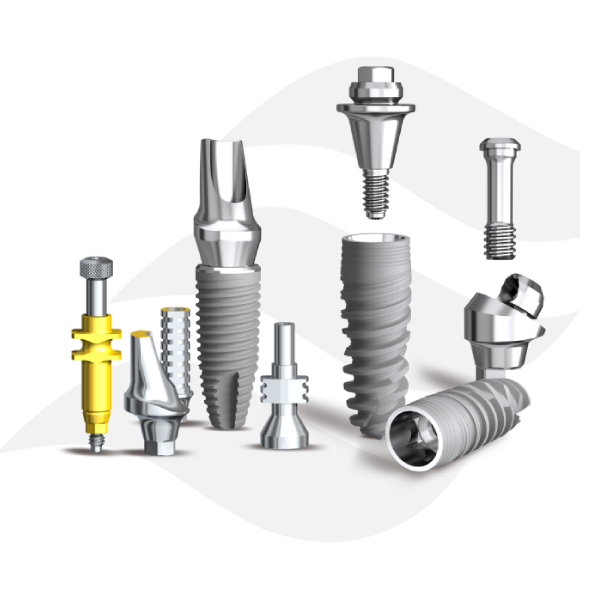
As a revolutionary NobelActive dental implant, it has become widely used in premium dental clinics around the world. In terms of later restoration and inventory management, for clinics already using NobelActive® workflows, compatible restorative components such as abutments, impression copings, analogs, and scan bodies can help simplify inventory management when selected carefully. Introducing high-quality NobelActive-compatible components can also be a practical way to optimize clinic operating costs.
NobelParallel™ Conical Connection
If NobelActive is the specialist for complex bone conditions, then NobelParallel™ Conical Connection is the versatile “all-rounder” in the clinic. Its core positioning is a straightforward, universal-use implant system, making it a common universal clinical choice for many experienced clinicians.
This implant can handle a very wide range of clinical indications. Whether used in the anterior or posterior region, for single-tooth or multi-unit cases, or even for full-arch restorations, NobelParallel CC implants can provide reliable primary stability across different bone densities and support immediate loading protocols.
With the mechanically strong Nobel Parallel Conical Connection, this system helps reduce restorative micromovement and bacterial microleakage. For clinics or laboratories that frequently use this system, choosing high-precision NobelParallel-compatible abutments, along with matching healing abutments, temporary abutments, impression copings, and implant analogs, can support a smooth restorative workflow while improving overall purchasing cost-effectiveness.
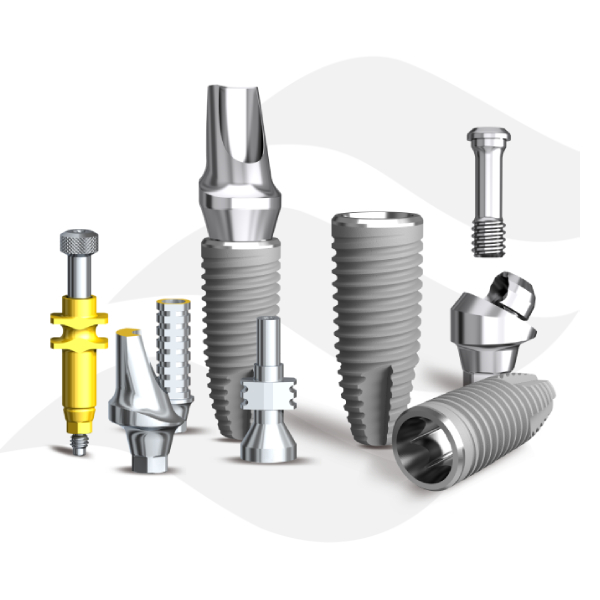
NobelReplace® Conical Connection
The core advantages of NobelReplace® Conical Connection are its classic tapered implant body, simplicity, and excellent clinical stability.
The implant profile closely resembles the shape of a natural tooth root, giving it a wide range of clinical indications. It is especially useful when anatomical structures create limited space, such as when clinicians need to avoid the mandibular nerve canal or adjacent tooth roots. In these situations, NobelReplace can provide valuable surgical flexibility. At the same time, its tapered body also supports strong primary stability for osseointegration.
Nobel S Series
As a newer-generation system promoted by Nobel Biocare in recent years, the Nobel S Series takes simplicity and efficiency to a higher level.
According to official information, one of the most important breakthroughs of this series is its “one single prosthetic connection size.” This means that regardless of the implant diameter placed by the clinician, the restorative stage can use one unified connection size for abutments and components. This design significantly reduces clinic and laboratory inventory pressure and improves clinical efficiency.
NobelActive vs NobelParallel CC: What Is the Difference?
In clinical treatment planning and clinic consumable purchasing, “NobelActive vs NobelParallel CC” is one of the most frequently discussed topics among implant dentists and purchasing managers. It is important to make one point clear: there is no absolute answer to which one is better. The key difference lies in their macro-design, and the real goal is to match the right implant system to the right clinical case.
To help you make a more accurate decision in real-world practice, the following table compares the core technical features and indications of these two flagship systems.
| Factor | NobelActive® | NobelParallel™ CC |
|---|---|---|
| Main Strength | Provides high primary stability in demanding cases | Strong universal use with a simple and straightforward surgical workflow |
| Common Use Cases | Soft bone, extraction sockets, esthetic zone, immediate implant placement | Broad indications, anterior/posterior regions, single-tooth, multi-unit, and full-arch restorations |
| Implant Design | Expanding tapered body with sharp cutting blades | Parallel-walled body with a tapered apex |
| Clinical Positioning | More aggressive design focused on maximum primary stability | Versatile, simplified system for broad clinical use |
Practical Analysis: How to Choose the Right System for a Case
NobelActive®: A powerful tool for complex bone conditions
Its aggressive expanding tapered body and cutting blade design give the implant strong bone-condensing ability during insertion. This is a more active and stability-focused design. When dealing with soft bone, such as the posterior maxilla, fresh extraction sockets, or immediate loading in the esthetic zone, NobelActive can provide exceptional primary stability.
NobelParallel™ CC: An efficient foundation for daily clinical practice
By comparison, the philosophy of NobelParallel CC is simplification. Its parallel-walled body with tapered apex provides excellent versatility, while the surgical drilling protocol is more standardized and forgiving. Whether used for routine single posterior restorations or complex full-arch rehabilitation, this system can perform reliably and is well suited for standardized clinical workflows.
Practical recommendation for dentists and clinic operators:
If your clinical focus is demanding immediate placement, immediate function, or extremely soft bone, NobelActive should be a key system in your inventory. On the other hand, if you want one implant system that can cover most routine indications and greatly simplify inventory management for both the clinic and dental laboratory, NobelParallel CC may be a more convenient and operationally efficient universal choice.
What Makes Nobel Conical Connection Important?
When evaluating the long-term success of an implant system, the shape of the implant body is certainly important. However, the implant-abutment connection is often one of the key factors that determines the longevity of the restoration. Nobel’s widely respected conical connection plays a critical role here.
This precise internal connection design can provide excellent implant-abutment stability. Through strong mechanical engagement, it helps minimize the risk of micromovement under occlusal loading. This “cold welding” effect not only helps reduce bacterial microleakage, but also provides strong support for the gingival soft tissue, helping create an ideal esthetic emergence profile.
However, clinicians must also understand the importance of restorative precision. Even if the implant body is well integrated in the bone, the entire system may still face risks if low-precision restorative components are used. From the abutment and screw to the impression coping, analog, and scan body, the manufacturing accuracy of every component directly affects the fit of the final restoration. This is why quality control is essential when selecting compatible components.
Original Nobel Components vs Compatible Nobel Components
When clinics and dental laboratories enter the restorative stage, they usually face two component options: original components and compatible components. Understanding the difference between the two in an objective and rational way is essential for optimizing clinical operating costs while maintaining treatment quality.
Original Nobel components are designed and manufactured by Nobel Biocare. They are supported by the original system data and are the preferred choice within the official manufacturer’s warranty system.
Compatible Nobel components are produced by third-party manufacturers according to the corresponding connection specifications of specific Nobel implant systems. They are intended to fit particular Nobel implant platforms and systems.
When choosing high-quality compatible components, you should be as strict as you would be when selecting implants. Pay close attention to the following key factors.
- Connection accuracy: Does the component fit the original conical connection precisely, without gaps?
- Material quality: Medical-grade titanium, commonly Titanium Grade 5, is usually required.
- Screw fit: Does the screw provide reliable fatigue resistance and torque transmission?
- Platform compatibility: Are platform markings such as NP, RP, and WP clearly and accurately labeled?
- Sterilization and packaging: Does the product meet strict clinical sterility requirements?
- CE / ISO certification: Does the product have internationally recognized medical device manufacturing qualifications?
- Supplier reliability: Can the supplier provide long-term stable supply and after-sales support?
- Disclaimer:
Compatible components should be selected according to the exact implant system, platform size, and clinical indication. They are not manufactured by Nobel Biocare unless specifically stated.
When Compatible Components May Be Useful
In daily clinic operations, high-quality compatible components can be highly practical in the following clinical and management scenarios.
- Clinic inventory replenishment: Quickly restock commonly used models with high consumption.
- Temporary restorations: Reduce the overall treatment cost for patients during the healing phase.
- Routine prosthetic components: Provide alternatives for non-implantable consumables such as impression copings and analogs.
- Multi-case purchasing and cost control: Improve the profitability of larger clinics while maintaining precision.
- Core system inventory: Build sufficient inventory of commonly used components for high-frequency Nobel Active and Nobel Parallel CC workflows.
What to Check Before Buying Nobel-Compatible Components
To avoid clinical errors and ensure smooth restoration, purchasing managers or clinicians should verify the following key questions before placing an order.
- System compatibility: Is it for NobelActive® or NobelParallel CC? The connection interfaces are different and cannot be mixed.
- Platform size: What platform size is required? For example, 3.0, NP, RP, or WP.
- Clinical purpose: Is it for impression taking, temporary restoration, healing, or final restoration?
- Component completeness: Is the screw included?
- Regulatory compliance: Is it CE / ISO certified?
- Specification transparency: Does the supplier clearly list the compatible systems and platforms?
At Dentalssale, clinicians can find Nobel Active® and Nobel Parallel CC® compatible implants and prosthetic components, including abutments, impression accessories, and related restorative parts for clinic inventory needs. We provide cost-effective consumables with strict quality inspection for dentists worldwide, helping your clinic operate more efficiently.
Clinical Applications of Nobel Implants
Thanks to its extensive product line and complete component ecosystem, the Nobel implant system can handle almost all dental implant indications. From the simplest single-tooth restoration to highly challenging full-arch reconstruction, its main clinical applications include:
- Single-tooth restoration
- Multiple missing teeth
- Full-arch restorations
- Immediate implant placement
- Immediate loading / immediate function
- Esthetic zone cases
- Posterior cases with higher loading demands
Single-Tooth Restorations
When treating a single missing tooth, the standard clinical workflow usually includes three key steps: implant, abutment, and crown. In this type of case, the advantage of the Nobel system lies in its excellent soft tissue management.
Especially in the anterior esthetic zone, clinicians can use dedicated healing abutments and temporary abutments to shape the facial gingival contour during osseointegration. This precise emergence profile management helps the final porcelain or all-ceramic crown appear as if it naturally grows out of the gingiva.
Full-Arch and Immediate Function Cases
When treating full-arch edentulous cases, Nobel Biocare is undoubtedly an industry benchmark. As the originator of the All-on-4® treatment concept, its tilted implant protocol and dedicated multi-unit abutments have transformed the treatment experience for edentulous patients.
However, it is important to emphasize that immediate function in full-arch cases has very high clinical requirements. It depends not only on implant stability, but also on highly accurate prosthetically driven planning before surgery and precise abutment selection during the procedure.
Are Nobel Implants Good?
For patients and beginner clinicians asking this question, the answer is yes: Nobel implants are widely recognized as premium dental implant systems. In material science, surface treatment, and mechanical design, they represent a high level of implant technology.
However, as responsible dental professionals, we should not use exaggerated claims such as “100% success.” Long-term implant survival depends not only on the implant itself, but also on case selection, surgical technique, restoration design, and the patient’s long-term oral maintenance.
The evidence speaks for itself. Taking NobelActive, a system designed for demanding cases, as an example, official long-term clinical data shows that across 107 independent clinical studies involving more than 6,300 patients and over 22,500 implants, with follow-up of up to 12 years, the mean survival rate reached 97.9%. This strong clinical data is one of the fundamental reasons why leading dentists around the world continue to trust the Nobel system.
How to Choose the Right Nobel Implant Components
For clinic purchasing managers and dental laboratories, accurate component purchasing directly affects clinical efficiency and overall treatment cost. When facing a large and complex catalog of implant consumables, how can you avoid buying the wrong model or a component that cannot be seated properly? The following four steps can be used as an internal purchasing guide for your clinic.
Identify the Implant System First
Confirming the exact implant system is the first step in purchasing. Different Nobel Biocare series have different internal connection structures, and components must not be mixed. Before placing an order, always verify which system is in the patient’s mouth.
Common systems include:
- NobelActive®
- NobelParallel™ CC
- NobelReplace®
- Nobel S Series
- Legacy systems, such as early external hex or tri-channel connections
Confirm the Platform Size
Even after confirming the implant system, you still need to accurately match the platform size. This is a key parameter that determines whether the abutment can lock tightly and properly. Different platforms must never be mixed.
Common platform codes include NP, RP, and WP.
Cross-platform matching is strictly not recommended. For example, an NP component cannot create a proper mechanical seal on an RP implant. Forcing mismatched components may cause micromovement or even implant fracture.
Match the Component to the Workflow
Implant restoration is a multi-step clinical and laboratory process. You need to select the correct functional component according to the current treatment stage.
- Healing abutment: Used for soft tissue shaping and emergence profile development after implant placement.
- Impression coping: Designed for traditional silicone impression taking, available in open-tray and closed-tray options.
- Scan body: Used for intraoral or model scanning and serves as the key entry point for digital impression workflows.
- Analog: Accurately replicates the three-dimensional position of the implant in a stone model or 3D-printed model.
- Temporary abutment: Used to fabricate a transitional temporary crown and help maintain or guide soft tissue contours.
- Final abutment: Supports the final permanent restoration and may be a stock abutment or a customized milled abutment.
Check Certification and Material
If you choose high-quality third-party compatible components, quality compliance must be a non-negotiable requirement. Poor-quality components may not only cause screw loosening, but also damage the internal connection of the original implant. Be sure to check the following factors.
- Titanium material: The component should be made from medical-grade Titanium Grade 5 to ensure excellent fatigue resistance.
- CE & ISO certification: These certifications help confirm that the production process follows internationally recognized medical device quality management standards.
- Clear labeling and batch traceability: A reliable manufacturer should clearly label the compatible platform on the package and provide batch traceability.
- Sterilization: For components used directly in the mouth, always confirm whether the product is supplied sterile.
Conclusion: Are Nobel Implants the Right Choice?
In summary, Nobel implants are undoubtedly among the most mature, premium, and widely used implant systems in global implant dentistry today. Their strong literature foundation and continuously refined design concepts provide clinicians with a high level of surgical predictability.
In terms of system selection, NobelActive, with its aggressive cutting thread and expanding tapered design, is a powerful solution for complex cases requiring high primary stability, such as immediate placement in extraction sockets and soft bone conditions. NobelParallel CC, with its excellent versatility and simplified surgical workflow, has become a strong foundation for routine clinical use and a wide range of indications.
For a modern dental clinic focused on efficient operation, the success of implant restoration does not depend only on the implant body itself. The accurate selection of restorative components and high-quality compatible components also has a significant impact on chairside efficiency, laboratory turnaround time, and overall operating cost. Mastering a scientific component selection and purchasing strategy is key to maximizing the clinical value of the Nobel implant system.
FAQ
FAQ 1: What are Nobel implants?
Nobel implants usually refer to the globally recognized Nobel Biocare dental implant system.
Clinically, they are used to replace missing natural tooth roots and provide strong physical support for later single crowns, multi-unit bridges, or full-arch restorations.
FAQ 2: Are Nobel implants good?
Yes. Nobel implants are widely recognized in the industry as a premium and high-end implant system.
They have decades of strong clinical history and extensive scientific literature support. However, the long-term success of any dental implant also depends heavily on accurate diagnosis, skilled surgical technique, appropriate prosthetic design, and the patient’s long-term daily maintenance.
FAQ 3: What is the difference between NobelActive and NobelParallel CC?
The core difference lies in their macro-design and clinical positioning.
NobelActive features an aggressive thread and expanding tapered design, focusing on high primary stability in demanding cases such as extraction sockets and soft bone.
By contrast, NobelParallel CC uses a parallel-walled design and is a highly universal implant system, making it more suitable for routine workflows and a broad range of clinical indications.
FAQ 4: Are Nobel implants better than Straumann?
Nobel Biocare and Straumann are both top-tier premium brands in the global dental implant field. There is no absolute answer as to which one is better.
The final choice depends on bone condition, dentist preference, restorative treatment plan, and local component availability.
FAQ 5: Can I use compatible components with Nobel implants?
Yes. In clinical and laboratory restorative workflows, using high-quality third-party compatible components is very common.
However, the components must be precisely designed for the specific Nobel system and platform size. Before ordering, clinicians and purchasing managers must carefully verify platform compatibility, material quality, CE/ISO compliance, and supplier reliability.
FAQ 6: What components are needed for Nobel implant restoration?
Completing a standard Nobel implant restoration usually requires a full chain of components across multiple clinical and laboratory steps.
The most common restorative components include healing abutments, impression copings, scan bodies, implant analogs, temporary abutments, final abutments, fixation screws, and other prosthetic accessories.
FAQ 7: Are Nobel-compatible components original Nobel Biocare products?
Not necessarily. Compatible components are usually manufactured by qualified third-party medical device manufacturers and are designed to fit specific Nobel implant systems.
Reliable compatible products should clearly indicate their compatibility and size on the packaging. Unless specifically stated as manufactured by Nobel Biocare, they should not be promoted or understood as original Nobel Biocare components.
trademark disclaimer:
Nobel Biocare®, NobelActive®, NobelParallel™, NobelReplace®, and All-on-4® are registered trademarks or trademarks of Nobel Biocare Services AG. Dentalssale compatible products are third-party components and are not manufactured by Nobel Biocare unless specifically stated.