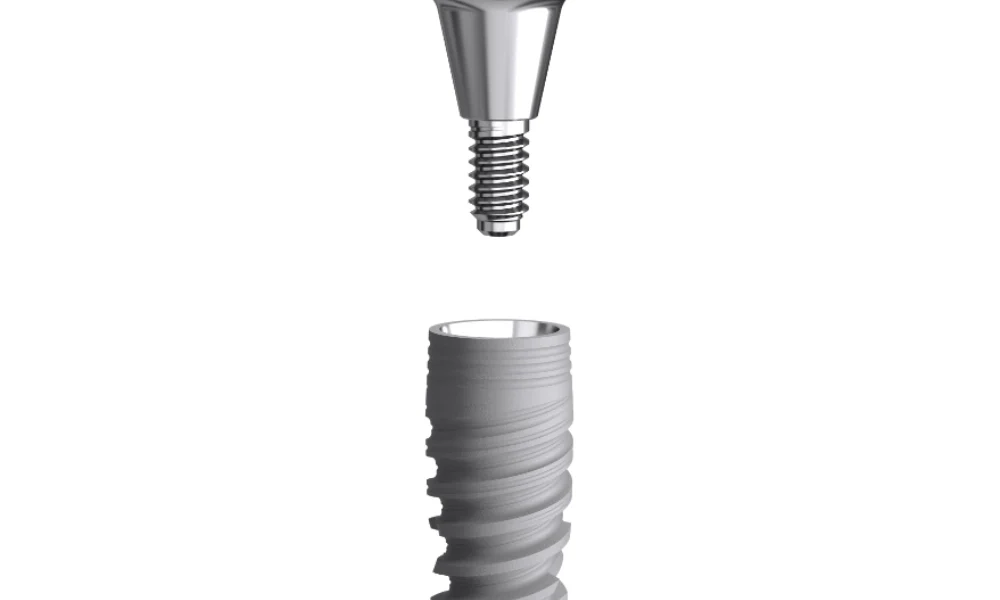
As a milestone technology in modern oral rehabilitation, dental implants rely on the biological integration between the artificial root and bone tissue to achieve functional restoration, and the choice of material directly determines the long-term stability and safety of the implant. Globally, titanium has become the “gold standard” in the field of implants due to its excellent biocompatibility, corrosion resistance, and mechanical properties that closely match bone tissue. Its surface oxide layer can activate osteoblast activity, enabling direct bone cell attachment; the elastic modulus of Grade 4 pure titanium is close to that of natural bone, effectively reducing stress shielding and subsequent bone resorption. Clinical data show that the 10-year survival rate of titanium implants exceeds 95%, far surpassing other metallic or ceramic materials. This article will explore why titanium continues to dominate clinical applications by analyzing its biological mechanisms, durability advantages, and comparisons with alternative materials, while incorporating opinions from international experts to provide patients with a scientific basis for material selection.
What Is Titanium?
Titanium is a metallic element known for its exceptional strength-to-weight ratio, corrosion resistance, and biocompatibility, making it one of the most reliable materials in modern medicine. It is a lightweight metal with a silver-gray appearance, a high melting point (about 1668°C), and excellent mechanical stability, even under extreme conditions. Chemically, titanium forms a stable oxide layer on its surface (titanium dioxide, TiO₂), which protects it from corrosion and enables safe interaction with human tissues.
In the medical field, titanium is highly valued because it combines high mechanical strength with low density, allowing for durable yet lightweight medical devices. Its inert and non-toxic nature prevents adverse immune responses, while its surface naturally encourages bone cell attachment and integration—an essential factor for long-term implant success.
Titanium’s application in dentistry and orthopedics dates back to the mid-20th century. Since then, it has been widely used in dental implants, bone plates, joint replacements, and fixation screws, proving its stability and safety through decades of clinical evidence. Today, titanium remains the material of choice for dental implants due to its unmatched combination of biological compatibility, strength, and proven clinical outcomes.
How Does Titanium Bond with Bone?
The bonding between titanium and bone relies on a biological mechanism known as osseointegration, in which the surface of the titanium implant and the bone tissue achieve direct contact under an optical microscope without the intervention of fibrous connective tissue. This process is realized through the following mechanisms:
1. Osseointegration
Biological Activation of the Surface Oxide Layer
Titanium spontaneously forms a titanium dioxide (TiO₂) film approximately 2–10 nanometers thick when exposed to air, which possesses excellent biocompatibility. The TiO₂ surface can adsorb plasma proteins (such as fibronectin and osteopontin) through electrostatic interactions. These proteins act as “biological signaling molecules,” activating integrin receptors on osteoblasts to promote cell adhesion, proliferation, and differentiation.
Microstructural Interlocking Effect
The surface of titanium implants is commonly treated by sandblasting and acid etching (SLA) or large-grit sandblasting (MP) to create micron-scale pores (50–100 μm in diameter) and nano-scale roughness. This multilevel surface topography increases the contact area between bone cells and the implant while providing physical anchor points for bone tissue ingrowth. Studies have shown that when the surface roughness (Ra) is between 1–2 μm, the bone-to-implant contact (BIC) can reach 60%–80%, significantly higher than that of smooth surfaces (BIC < 30%).
Ion Exchange and Chemical Bonding
In a physiological environment, the titanium surface releases trace amounts of Ti⁴⁺ ions, which participate in the mineralization of the bone matrix by forming chemical bonds with phosphate groups (PO₄³⁻) in hydroxyapatite (HA). Additionally, the negatively charged titanium surface attracts calcium ions (Ca²⁺), promoting local HA deposition and forming a “bone-like” structure.
2. Immune Tolerance
Low Immunogenicity
Titanium is an inert metal whose surface oxide layer effectively isolates corrosive substances in body fluids (such as chloride ions and acidic metabolites), preventing metal ion release and subsequent immune reactions. Animal studies show that macrophage infiltration around titanium implants is significantly lower than that around cobalt-chromium alloy (CoCr) and stainless steel (SS) implants, and no T-cell–mediated Type IV hypersensitivity reactions have been detected.
Formation of an Anti-inflammatory Microenvironment
The titanium oxide layer can adsorb anti-inflammatory cytokines (such as IL-10 and TGF-β) while suppressing the expression of pro-inflammatory factors (such as IL-1β and TNF-α). Clinical studies have confirmed that the number of inflammatory cells (neutrophils and lymphocytes) in soft tissues surrounding titanium implants is 30%–50% lower than that observed with other metal implants, with significantly reduced postoperative swelling and pain.
Suppression of Fibrous Encapsulation
Unlike fibro-osseous integration (where fibrous connective tissue exists between the implant and bone), titanium implants achieve direct bone-to-implant contact, preventing fibrous capsule formation. Fibrous encapsulation can cause bone resorption due to the stress-shielding effect, while the osseointegrated structure of titanium implants evenly distributes occlusal forces, maintaining long-term stability.
3. Scientific Evidence
Long-term Success Rate
- 5-year success rate: 96.5% in the mandible, 82% in the maxilla (Schnitzman et al., Harvard Conference Standard, 1979).
- 10-year success rate: Overall 93%, with Grade 4 pure titanium implants achieving over 95% survival (Swedish Brånemark system long-term follow-up).
- Special case: The world’s first titanium implant placed in 1965 has functioned normally for 59 years.
Speed of Osseointegration
- Under ideal conditions: 6–8 weeks (for surface-coated titanium alloy hip replacements) to 3 months (for cervical/lumbar fusion devices) to achieve osseointegration.
- Influencing factors: malnutrition, diabetes, or smoking can extend the period to over 3 months; surface treatments (e.g., SLA) can shorten osseointegration time by 30%–50%.
Comparative Advantages
- Grade 4 pure titanium: Best biocompatibility; elastic modulus (105–110 GPa) close to natural bone (10–30 GPa), minimizing stress-shielding effects.
- Zirconia ceramics: Good translucency but high brittleness (fracture toughness 6–10 MPa·m⁻²), making them risky for posterior regions.
- Titanium alloy (Ti-6Al-4V): High tensile strength (900 MPa) but contains aluminum (Al) and vanadium (V), which raise long-term biocompatibility concerns.
Advantages of Titanium Dental Implants
1. High Strength and Durability: Withstanding the Extreme Mechanical Environment of the Oral Cavity
The tensile strength of titanium (900–1100 MPa) and its yield strength (800–1000 MPa) are far higher than that of human bone tissue (the tensile strength of cortical bone is about 130 MPa), making it an ideal material for withstanding chewing forces.
Bite Force Resistance:
A single implant in the posterior region must endure a vertical occlusal force of approximately 500–800 N. Titanium implants, through optimized design features such as Morse taper connections and platform-switching technology, can evenly distribute stress into the bone tissue, preventing local stress concentration that could cause bone resorption or implant fracture.
Fatigue Resistance:
Titanium’s fatigue limit (about 600 MPa) is far greater than the cyclic loading in the oral cavity (approximately 10⁴–10⁵ cycles per day with a stress amplitude <100 MPa). Clinical follow-up data show that the probability of material fatigue fracture in titanium implants within 20 years of use is less than 0.5%.
Comparative Advantages:
While zirconia ceramics have a comparable tensile strength (900–1200 MPa), their brittleness index (fracture toughness 6–10 MPa·m¹/²) is only one-third that of titanium, leading to a significantly higher risk when used in posterior regions. Cobalt-chromium alloys (CoCr) offer sufficient strength but have a much higher elastic modulus (210 GPa) than bone tissue (10–30 GPa), easily causing stress-shielding effects.
2. Excellent Biocompatibility: “Harmonious Coexistence” with Human Tissue
The biocompatibility of titanium has been verified through tens of millions of clinical applications worldwide, with the following core mechanisms:
Low Immunogenicity:
The titanium oxide layer (TiO₂) acts as a protective barrier, isolating the metal from body fluids and preventing ion dissolution. The ion release rate is extremely low (<0.01 μg/cm²/day). Clinical analyses show that titanium ion concentration in surrounding tissues (<1 μg/g) is far below the toxicity threshold (>100 μg/g).
Anti-inflammatory Microenvironment:
The negatively charged surface of titanium can adsorb anti-inflammatory cytokines (such as IL-10 and TGF-β) while suppressing pro-inflammatory cytokines (such as IL-1β and TNF-α). Studies confirm that inflammatory cell infiltration in soft tissues surrounding titanium implants is 60% lower than that around stainless steel implants, while postoperative swelling and pain decrease by 40%.
Osseointegration Capability:
The micro-rough surface of titanium (Ra 1–2 μm) promotes osteoblast adhesion, proliferation, and differentiation, leading to direct bone contact with Bone-to-Implant Contact (BIC) rates of 60%–80%. Animal studies show that after 4 weeks, titanium implants can achieve bone bonding strength of 20–30 MPa, comparable to the biomechanical properties of the natural periodontal ligament.
Medical Certification:
Titanium and titanium alloys have been certified by FDA and CE as “biologically safe Class I materials”, suitable even for patients with allergic tendencies (titanium allergy incidence <0.1%).
3. Long Lifespan: Reliable Functionality for Decades
With proper maintenance—daily cleaning and regular checkups—titanium implants can last for decades.
Clinical Data:
- 5-year success rate: 96.5% in the mandible, 82% in the maxilla (Brånemark System, 1977–1982 follow-up).
- 10-year success rate: Overall 93%; Grade 4 pure titanium implants exceed a 95% survival rate (long-term Swedish study).
- 20-year success rate: Remains above 85% (German DGI Association, 2018 report).
Case Evidence:
The world’s first titanium implant, placed in 1965, has functioned normally for 59 years. A Japanese case showed that an 80-year-old patient maintained titanium implants for 25 years with stable bone height and no loosening or infection.
Maintenance Impact:
Conditions such as periodontal disease or smoking can increase implant failure risk by 3–5 times, but with proper care, the lifespan of titanium implants is comparable to natural teeth (average natural tooth lifespan: 40–50 years).
Disadvantages and Risk Analysis of Titanium Dental Implants
1. Titanium Allergy or Hypersensitivity: A Rare but Notable Immune Reaction
Although titanium is generally regarded as a low-allergen material, recent clinical studies have shown that allergic or hypersensitivity reactions to titanium are not entirely absent, with an incidence rate ranging from 0.6% to 6.3%. The underlying mechanism is primarily a Type IV hypersensitivity reaction (a T-cell–mediated delayed immune response), which may present as follows:
Clinical Manifestations
- Oral symptoms: Itching, burning sensations, pain, or even implant loosening in the peri-implant mucosa.
- Systemic symptoms: Eczema, contact dermatitis, plantar rashes, and in some cases, erythema on the palms or back.
Typical Case Reports
- Case 1: A 50-year-old female experienced persistent facial redness and itching for two years after receiving a titanium alloy implant. Her symptoms worsened temporarily after implant removal and were later confirmed as titanium allergy via Lymphocyte Transformation Test (LTT).
- Case 2: A 64-year-old female developed pain, eczema, and facial swelling within four days of implant placement. Symptoms disappeared immediately after implant removal and fully resolved within three weeks.
- Case 3: A 56-year-old male developed widespread skin rashes after implantation. Antihistamine treatment failed, and titanium allergy was later diagnosed. Symptoms completely resolved six months after implant removal.
Allergens and Diagnostic Methods
- Impurity factors: Trace impurities such as beryllium, cadmium, cobalt, and chromium (approximately 0.001%–0.035% by weight) in titanium or titanium alloys may trigger cross-allergic reactions—patients with known nickel or palladium allergies are at higher risk.
- Diagnostic tools:
- Patch test (gold standard)
- Lymphocyte Transformation Test (LTT)
- Memory Lymphocyte Immunostimulation Assay (MELISA)
However, clinicians should note the possibility of false positives in these tests.
2. Surface Treatments and Coating Technologies: Key Innovations to Reduce Risks
To minimize titanium implant–related allergic reactions and improve aesthetics, advancements in surface modification and coating technologies have become essential.
Surface Treatment Techniques
- Sandblasted, Large-Grit, Acid-Etched (SLA) Treatment: Creates micron-scale pores (50–100 μm in diameter), increasing the bone-to-implant contact area and enhancing osseointegration, with BIC rates reaching 60%–80%.
- Nano-structuring: Introduces nano-scale surface topographies that enhance osteoblast adhesion and shorten osseointegration time by 30%–50% compared with smooth surfaces.
- Ion Implantation: Incorporates calcium and phosphorus ions into the titanium surface, forming a hydroxyapatite-like layer to improve bioactivity.
Coating Technologies
- Hydroxyapatite (HA) Coating
- Advantages: Promotes direct bone bonding and reduces the risk of bone resorption.
- Risks: Potential coating detachment may cause infection or reduce mechanical durability (e.g., wear resistance).
- Titanate Coating
- Advantages: Enhances antibacterial properties and decreases the incidence of peri-implantitis.
- Example: A clinical study reported a 40% reduction in postoperative infection rates in titanate-coated implants compared with uncoated ones after one year.
- Drug-Eluting Coatings
- Advantages: Enable local antibiotic release (e.g., vancomycin) to prevent early-stage infection.
- Limitations: Require precise dosage control to prevent antibiotic resistance.
Technical Outcomes
- Improved Osseointegration: Surface modification strengthens bone-implant bonding, enhancing initial stability by 20%–30%.
- Reduced Allergy Risk: The pure titanium oxide layer (TiO₂) effectively prevents metal ion leaching, thereby lowering immunogenicity.
- Enhanced Aesthetics: The combination of all-ceramic abutments and surface polishing technology eliminates metallic color shine-through, improving gingival appearance.
Are There Alternatives to Titanium Implants?
Titanium implants have long dominated the field of dental implantology due to their excellent biocompatibility and osseointegration capability. However, with advances in material science, zirconia implants have gradually become an important alternative—particularly in anterior restorations—thanks to their superior aesthetic properties. The following comparison examines aesthetics, mechanical strength, and bone-healing capacity, along with clinical recommendations for material selection.
1. Aesthetic Comparison
Titanium Implants
- Risk of metal show-through: In patients with thin gingival tissue (e.g., in the anterior region), the metallic hue of titanium abutments can become visible through the soft tissue, producing a “gray shadow” effect that compromises esthetics. Clinical data indicate that approximately 15% of patients with thin gingiva exhibit visible metallic contours postoperatively.
- Solutions: Gingival thickening procedures (such as free gingival grafts) or the use of all-ceramic abutments can alleviate this issue, but they increase treatment complexity.
Zirconia Implants
- Natural tooth-like translucency: The optical properties of zirconia are close to those of natural enamel, and it carries no risk of metal ion release. Even if gingival recession occurs, zirconia maintains its natural shade. For example, ZENOSTAR multilayer zirconia implants achieve seamless color blending with adjacent teeth through multi-layer shading technology.
- Clinical outcomes: A study on anterior restorations reported that 92% of patients with zirconia implants were satisfied with the aesthetic outcome one year post-surgery—significantly higher than the 78% satisfaction rate for titanium implants.
Conclusion:
Zirconia demonstrates irreplaceable advantages in esthetically demanding anterior regions, especially for patients with thin gingiva, metal sensitivity, or those seeking a metal-free restoration.
2. Mechanical Strength Comparison
Titanium Implants
- Superior fatigue resistance: Titanium’s elastic modulus (105–110 GPa) is close to that of natural bone (10–30 GPa), effectively dispersing occlusal forces and minimizing bone resorption. Grade 4 pure titanium has a tensile strength of 550 MPa, while Grade 5 Ti-Zr alloys can reach 860 MPa, sufficient for high-load posterior applications.
- Long-term stability: Clinical follow-ups show that titanium implants have a fracture rate below 0.5% over a 20-year service period.
Zirconia Implants
- Improved flexural strength: With phase-stabilized structures (e.g., 3Y-TZP tetragonal zirconia), modern zirconia implants now exhibit flexural strengths of 900–1200 MPa, approaching that of titanium alloys. However, their brittleness index (fracture toughness 6–10 MPa·m¹/²) is still only one-third of titanium, posing a higher risk of fracture under heavy occlusal loads.
- Indication limitations: Currently, zirconia implants are primarily recommended for single-tooth anterior restorations. For multi-unit bridges or posterior restorations, occlusal load must be carefully assessed before use.
Titanium implants maintain a clear advantage in mechanical strength and versatility, making them ideal for posterior regions or patients with complex occlusal patterns. Zirconia implants, on the other hand, should be carefully indicated to avoid overloading and fracture risks.
Conclusion
Thanks to its exceptional biocompatibility, efficient osseointegration, and outstanding mechanical strength, titanium implants remain the “gold standard” in modern dental implantology. The stable oxide layer on the titanium surface minimizes the risk of allergic reactions, while advanced surface treatments such as sandblasting and acid etching (SLA) can shorten the bone integration period to 4–6 weeks, achieving long-term clinical success rates exceeding 95%.
Moreover, titanium’s elastic modulus closely matches that of natural bone, allowing it to effectively distribute occlusal forces and adapt to a full range of clinical applications—from single anterior restorations to full-mouth complex reconstructions.
Although zirconia and other new materials demonstrate excellent esthetic outcomes, titanium implants continue to hold unrivaled advantages in functional stability, broad clinical indications, and cost-effectiveness.
Ultimately, the choice of implant material should be based on the patient’s oral condition and aesthetic expectations. It is recommended to consult a professional dentist, undergo CBCT scanning and occlusal analysis, and develop a personalized treatment plan—ensuring that every implant becomes a solid foundation for lifelong oral health.
FAQ
Q1: Do dental titanium screws need to be removed?
A: In most cases, removal is not necessary.
Situations where removal is not required:
- When the implant Abutment is sealed beneath the dental crown, it is isolated from the oral environment, so the risk of infection is extremely low.
- Titanium plates used in orthognathic surgery can remain permanently if there is no infection or functional impairment.
Special cases where removal may be needed:
- Local infection or poor healing (incidence less than 1%);
- Psychological factors or a history of metal allergy (requires allergy testing confirmation);
- Screw displacement compressing nerves, causing pain or restricted movement.
Titanium bone screws used to fix membranes in GBR (Guided Bone Regeneration) procedures can be removed.
Q2: What materials are commonly used for dental screws?
A: Mainly titanium alloy and pure titanium, selected based on the restoration needs.
Pure Titanium Screws:
- Advantages: Excellent biocompatibility with a rejection rate below 1%; ideal for anterior aesthetic restorations or metal-sensitive patients.
- Disadvantages: Lower hardness (360–550 MPa); may fracture under high occlusal forces in posterior regions.
Titanium Alloy Screws:
- Advantages: Strength of 800–1100 MPa with superior fatigue resistance; suitable for posterior regions or immediate loading in limited bone conditions.
- Disadvantages: Requires high machining precision; more complex surface treatment.
Titanium-Zirconium Alloy Screws:
- Advantages: Hardness over 860 MPa, stronger osseointegration ability, allows for narrower implants (e.g., 3.3 mm diameter sufficient for single crown restoration).
Q3: What are the side effects of dental titanium screws on the body?
A: Low-probability risks exist, but serious side effects are rare.
- Allergic reactions: Less than 1% of patients may experience local redness, swelling, or itching; allergy testing is recommended.
- Infection risk: Long-term retention may increase bacterial growth, especially in patients with poor oral hygiene or low immunity.
- Tissue impact: Screw displacement or nerve compression may cause pain or limited movement—regular CBCT monitoring is advised.
- Secondary surgery risk: Delayed removal can increase surgical difficulty and potential complications (e.g., nerve injury).
Q4: How long can dental titanium screws last?
A: With proper maintenance, they can last over 10 years, or even a lifetime.
Material durability: Titanium alloy screws have 1.3–1.5 times the tensile strength of 304 stainless steel, with an annual corrosion rate of only 0.003 mm (half that of steel screws).
Key factors:
- Installation technique: Skilled operation reduces the risk of loosening or damage.
- Patient habits: Avoid chewing hard objects (e.g., nuts, crab shells) to extend lifespan.
- Oral care: Regular checkups and hygiene maintenance prevent infection.
Clinical data: With proper use, dental titanium screws can remain permanently, but should be reexamined every 6–12 months.
Q5: What are the disadvantages of titanium dental implants?
A: Pros and cons should be weighed according to individual needs.
Aesthetic limitation:
- Pure titanium crowns differ in color from natural teeth, which may affect appearance in the anterior region.
- Solution: Use zirconia all-ceramic crowns for better aesthetics and biocompatibility.
Mechanical strength limitation:
- Pure titanium has lower hardness and may fracture under high occlusal forces in posterior regions.
- Solution: Use titanium alloy or titanium-zirconium alloy implants.
High postoperative care requirement:
- Avoid chewing hard objects and attend regular checkups; otherwise, lifespan may be affected.
Tip: The specific choice should be based on oral condition, aesthetic needs, and budget—consult a professional dentist to create a personalized treatment plan.