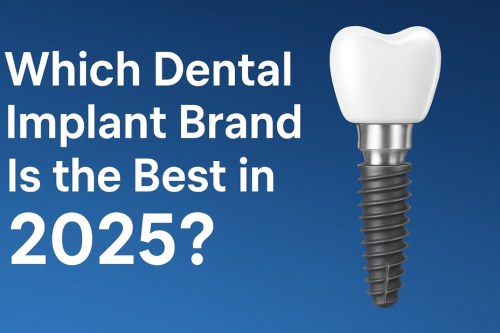
In the ongoing evolution of dental medicine, implant technology has become the top choice for many patients needing tooth restoration, thanks to its efficiency and stability. Among all the steps involved, the implant itself is the core component, and the choice of brand is especially crucial.
Different brands of dental implants can vary significantly in their design structure. Some brands emphasize tight integration with the alveolar bone, using unique thread designs to enhance primary stability. Others focus on mimicking the shape of natural tooth roots, creating a more favorable biomechanical environment for subsequent restorations. Surface treatment technology is also a competitive focal point: advanced surface treatments can promote osseointegration, shorten healing time, and increase long-term success rates. In terms of long-term stability, premium brands ensure that implants remain strong and reliable after years of use through strict quality control and clinical validation. As for prosthetic compatibility, it pertains to the convenience and aesthetics of later restorations — different brands have distinctive designs for abutments, prosthetic screws, and accessories.
Faced with a dazzling array of dental implant brands on the market, how to pick the system that best fits your patient’s clinical needs becomes a question every dental professional must thoughtfully address. This article will guide you through the major global dental implant brands, deeply analyze their characteristics and strengths, and provide you with a scientific, practical selection reference.
Dental Implant Brands to Watch in 2025
In the rapidly evolving field of dental implantology in 2025, choosing the right implant brand is crucial for ensuring surgical success and long-term oral health. The following brands have gained attention this year due to their unique technological advantages and strong clinical performance.
1. Nobel Biocare|Sweden
As a globally recognized high-end dental implant brand, Nobel Biocare boasts extensive and detailed clinical data. Its flagship products, NobelActive and NobelParallel, perform exceptionally in immediate implant procedures. Thanks to precise design and craftsmanship, these implants achieve rapid and stable osseointegration, significantly shortening patients’ treatment time. In addition, the brand’s products offer excellent prosthetic compatibility, seamlessly adapting to various restorative solutions, providing flexibility and convenience for subsequent dental restorations, and earning the trust of both dental professionals and patients.
2. Straumann|Switzerland
Straumann is a leading brand in the premium dental implant market, enjoying high recognition among dentists worldwide. Its signature technologies, SLActive® surface treatment and Roxolid® titanium-zirconium alloy, bring significant benefits. SLActive surface accelerates osseointegration, allowing the implant to integrate with surrounding bone more quickly and reducing healing time. Roxolid® alloy provides high strength and biocompatibility, making it particularly suitable for immediate loading, enabling patients to regain normal chewing function faster.
3. Dentsply Sirona (Astra Tech)|USA/Switzerland
Dentsply Sirona’s Astra Tech brand focuses on osseointegration and soft tissue stability. Its core technologies, MicroThread™ and OsseoSpeed™, enhance implant-bone connection through precise thread design and specialized surface treatment, while promoting healthy soft tissue attachment. Clinically, the brand demonstrates broad applicability and reliable performance, providing dentists with effective solutions for both routine and complex cases.
3. Zimmer Biomet|USA
Leveraging a strong orthopedic background, Zimmer Biomet applies mature and reliable design principles in dental implants. Its flagship system, Tapered Screw-Vent®, features a tapered thread design that offers excellent primary stability. This unique design distributes stress effectively, minimizing damage to surrounding bone tissue, making it especially suitable for complex cases. Whether dealing with limited bone volume or challenging anatomical structures, this system provides reliable support for implantation.
5. Osstem|South Korea
As a leading Asian dental implant brand, Osstem has achieved substantial global sales and widespread clinical application. Its flagship products, TS and GS series, are known for their high cost-effectiveness. While maintaining quality and performance, Osstem provides more affordable options for patients. The brand performs well in both immediate and conventional implant procedures, meeting the needs of a wide range of patients and becoming a common choice in many dental practices.
6. Neodent|Brazil
Neodent is a well-known dental implant brand in South America and has been steadily expanding its presence internationally. Its flagship products, Acqua and Drive series, demonstrate excellent primary stability. Unique design features allow the implants to gain immediate support from surrounding bone tissue, reducing micromotion and promoting osseointegration. Additionally, the brand’s products are user-friendly, highly prosthetically compatible, and can integrate seamlessly with various restorative components, offering dentists convenient and efficient handling while providing patients with better treatment outcomes.
How to Determine if a Dental Implant Brand is “Good”
1. Clinical Research and Scientific Validation
A high-quality dental implant brand must be supported by a large amount of long-term clinical research data. These data cover different patient populations and various implant scenarios, including key clinical indicators such as implant survival rate, osseointegration, and complication rates. Through long-term follow-ups and large sample studies, the safety and effectiveness of implants in real-world applications can be fully validated. For example, some well-known brands have accumulated decades of clinical research with tens of thousands of cases, proving that their implants achieve good treatment outcomes in patients with different bone volumes and ages. Such brands are undoubtedly more trustworthy. In contrast, brands that lack clinical research data have greater uncertainty regarding the reliability and stability of their products.
2. Surface Treatment Technology
Surface treatment technology is a key factor affecting the speed and quality of osseointegration. Common surface treatment methods include SLA (large-grit sandblasted acid-etched), SLActive (hydrophilic SLA), RBM (resorbable blasting media), and TiUnite (titanium oxide surface treatment). Different surface treatments change the microstructure and chemical properties of the implant surface, affecting how bone cells attach and grow. For example, SLActive technology makes the implant surface hydrophilic, allowing it to attract proteins and cells in the blood more quickly, promoting bone cell adhesion and proliferation, significantly shortening the osseointegration time, and improving primary stability. TiUnite technology, on the other hand, forms a special oxide layer that enhances chemical bonding between the implant and bone tissue, increasing osseointegration strength and long-term stability. Therefore, when choosing an implant brand, attention should be paid to the surface treatment technology it uses and its clinical performance.
3. Connection Design
The connection design of an implant directly affects the sealing and stability between the implant and the abutment. Common connection designs include internal hex, tapered (conical) connection, and platform switching. Internal hex is a traditional design with the advantages of simplicity and ease of operation, but it may develop micro-movement or micro-leakage over long-term use. Tapered connections achieve better self-locking through the conical interface, improving sealing and stability while reducing micro-leakage. Platform switching changes the connection position between the implant and abutment, distributing stress to a larger area of surrounding bone, which helps reduce bone resorption and improve long-term stability. A good implant brand will select the appropriate connection design based on different clinical needs and application scenarios to ensure reliability and stability during use.
4. Material Selection
Material selection is one of the core factors determining implant quality and performance. Common implant materials include Grade 4 or Grade 5 pure titanium, titanium-zirconium alloy, and zirconia. Grade 4 or 5 titanium has excellent biocompatibility, corrosion resistance, and mechanical properties, making it the most commonly used material for implants. Titanium-zirconium alloy adds zirconium to titanium, increasing strength and hardness while maintaining good biocompatibility, suitable for clinical cases requiring higher mechanical performance. Zirconia implants are aesthetically pleasing and biocompatible, but their mechanical performance is relatively weak, and they are mainly used in anterior regions with high aesthetic demands. A high-quality implant brand will choose suitable materials according to different product positioning and clinical requirements, and strictly control material processing and manufacturing procedures to ensure implant quality and performance.
5. Ease of Use
For dentists, the ease of use of implants is also an important factor when selecting a brand. A user-friendly implant brand should have a well-designed surgical system that simplifies the procedure, reduces operation time, and minimizes trauma. For example, some brands design their surgical tools according to ergonomic principles, making them comfortable to hold and flexible to operate, which can improve surgical efficiency. The completeness and compatibility of restorative components are also very important. Complete restorative components meet the restoration needs of different patients, while good compatibility ensures precise matching between components and the implant, improving restorative outcomes. Therefore, when choosing an implant brand, dentists should personally evaluate the surgical system and restorative components’ ease of use to select the brand that best fits their surgical habits and clinical needs.
6. Global Support and Compatibility
In today’s globalized world, global support and compatibility of a dental implant brand should not be overlooked. A brand with a strong global support system can provide dentists with timely and efficient technical support and after-sales service. Whether encountering problems during product use or needing to replace components, solutions can be obtained quickly. Moreover, the availability of components is crucial. If a brand’s components are difficult to obtain in the market, implant maintenance or repair can cause significant inconvenience for both dentists and patients. Therefore, when selecting a dental implant brand, it is important to understand its global sales and service network, as well as component supply, choosing a brand with strong global support and compatibility.
How to Choose a Suitable Dental Implant Brand
1. Case Type: Match the Brand to the Implant Need
Immediate Implantation
- Recommended Brands: ITI (Straumann, Switzerland), Nobel Biocare (Sweden), Osstem (USA).
- Reason: These brands use hydrophilic surface treatment technologies (e.g., ITI’s SLActive, Nobel’s TiUnite) that accelerate osseointegration and shorten healing time, making them suitable for immediate implants with rapid loading requirements.
Delayed Implantation
- Recommended Brands: Ankylos (Germany), Anthogyr (France).
- Reason: Delayed implantation requires long-term stability. These brands enhance bone integration through unique thread designs (e.g., Ankylos’ tapered connection), making them suitable for cases with sufficient bone volume and where long-term observation is needed.
Bone Augmentation Cases
- Recommended Brands: Astra (Sweden), Bicon (USA).
- Reason: Astra’s short implant design can avoid bone graft surgery. Bicon’s short implants (e.g., 8.5 mm) are suitable for areas with insufficient bone volume, reducing surgical trauma.
2. Bone Quality: Select Thread Design According to Bone Density
Soft Bone Areas (e.g., posterior maxilla)
- Recommended Design: Strong self-tapping tapered threads (e.g., ITI bone-level implants).
- Reason: Tapered design disperses stress, reduces pressure on soft bone, and improves primary stability.
Dense Bone Areas (e.g., anterior mandible)
- Recommended Design: Deep-cut threads (e.g., NobelActive series).
- Reason: Deep threads enhance mechanical locking with dense bone and prevent micromotion.
Are Expensive Brands Necessarily Better?
Expensive implant brands are not necessarily better. Next-generation brands (such as DentalMaster) achieve a balance between performance, compatibility, and cost through optimized design and manufacturing processes. For patients, a system that combines stable performance with reasonable pricing is often the more sensible choice. The details are as follows:
Reasons Why Expensive Brands Are Not Necessarily Better
- Brand Premium: Some well-known brands set higher prices to cultivate a high-end image and attract affluent consumers. However, this does not mean their products outperform others in terms of quality or performance.
- Supply and Demand: In a market economy, prices are often influenced by supply and demand. Certain brands may be priced higher due to scarcity in the market, but this does not directly reflect the actual value of their products.
- Individual Needs: Everyone’s perception of value and needs differ. For some, high-priced products may indeed offer extra value, such as luxury cars or designer watches. For others, price and practicality matter more, and they may not wish to pay for brand premiums.
Advantages of Next-Generation Brands
- Optimized Design and Manufacturing: Next-generation brands (such as DentalMaster) optimize design and manufacturing processes to balance performance, compatibility, and cost. They use advanced materials and technologies to ensure product stability and durability while lowering production costs, making prices more reasonable.
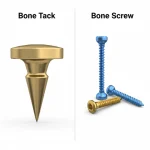
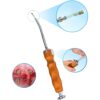
- Compatibility and Comprehensive Components: Next-generation brands often provide complete components and solutions. For example, DentalMaster is compatible with Nobel Active and NobelParallel and offers one-stop purchasing services, including abutments and impression caps. They also provide GBR kits, specialized Auto bone tack kits, and bone screw kits, improving the efficiency of dental implant procedures.
- Cost-Effectiveness: Next-generation brands offer performance comparable to expensive brands but at more affordable prices. This allows patients to choose economically without compromising quality.
Patient Recommendations
- Stable Performance: When choosing a dental implant brand, patients should prioritize stability. This includes osseointegration ability, fatigue resistance, and corrosion resistance of the implant.
- Reasonable Price: Within performance requirements, patients should select brands with reasonable pricing. Avoid paying extra for unnecessary brand premiums while ensuring long-term stability and oral health.
- Consultation with Dentists: Patients should seek advice from professional dentists when selecting an implant brand. Dentists can recommend the most suitable brand based on the patient’s specific conditions, such as bone quality and case type.
Conclusion
When choosing a dental implant brand, the key is to focus on scientific evidence and clinical suitability, taking into account the surgical plan (e.g., immediate vs. delayed implantation), bone conditions (soft vs. dense bone), and the patient’s individual needs (budget, ability to maintain oral hygiene), rather than simply pursuing high-priced brands.
Different brands have their respective technical advantages. High-end brands (such as ITI and Nobel Biocare) excel in long-term stability and comprehensive components, while next-generation brands (such as DentalMaster) achieve a balance between performance and cost through optimized design.
Ultimately, the choice should be guided by professional dental advice, prioritizing implant systems with robust clinical data that match the patient’s specific situation. This ensures both effective treatment outcomes and economic efficiency.