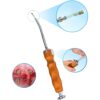

In the field of dental implant surgery, bone regeneration and augmentation techniques play a pivotal role. They are not only essential for restoring oral function and improving aesthetics but also serve as the foundation for ensuring the long-term stability and success of implants. However, in clinical practice, an important challenge lies in how to effectively secure the membranes or grafting blocks required for bone regeneration. Improper fixation methods may lead to material displacement or uneven resorption, thereby compromising the outcomes of bone regeneration and even jeopardizing implant stability. For this reason, finding a reliable and efficient fixation device has become particularly critical. Against this backdrop, Bone Tacks and Bone Screws, as two commonly used fixation tools, have gradually become indispensable auxiliary instruments in dental implant surgery thanks to their excellent fixation performance and clinical effectiveness. This article will explore their crucial roles and application value in the process of bone regeneration and augmentation.
What is a Bone Tack?
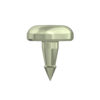
Bone Tacks, as small and short fixation devices, play a unique role in the fields of dentistry and orthopedic surgery. They can be directly and precisely inserted into the bone surface, providing reliable support for the stabilization of surgical materials.
Bone Tacks have distinct characteristics. They are primarily used for the fixation of membranes (such as clinically common collagen membranes) or titanium meshes. In terms of instruments, an automatic tack applicator can be employed, allowing the tack to be placed quickly and accurately in the desired position. Alternatively, a tack fixation kit can be used, which comes with a complete set of tools to meet the needs of different surgical scenarios. The operation is straightforward, and with minimal training, clinicians can master the technique, completing fixation in a short time and significantly improving efficiency.
The main application of Bone Tacks lies in the stabilization of membranes during bone augmentation procedures. In such surgeries, membrane stability is directly related to the outcome of bone regeneration and the overall success of the procedure. Using Bone Tacks effectively prevents postoperative displacement or loosening of the membrane caused by external forces, thereby creating a stable and favorable environment for bone regeneration and repair. This ensures that bone augmentation surgeries can achieve their intended therapeutic goals.
What is a Bone Screw?
A Bone Screw is a specialized screw with a helical structure that, during surgical procedures, must be precisely inserted into the bone using dedicated instruments in order to achieve stable fixation.
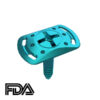
Bone Screws have notable characteristics. Compared with other fixation devices, they are generally longer in design, which allows them to provide stronger and more durable stability once implanted into bone. This significantly enhances the reliability of fixation, making them particularly suitable for surgical scenarios that require high fixation strength. Clinically, Bone Screws are most commonly used for securing bone graft blocks. After a graft block is placed within the body, reliable stabilization is essential to ensure proper integration with the surrounding bone tissue. Thanks to their excellent fixation performance, Bone Screws can effectively prevent graft displacement and create a stable environment that supports bone healing and regeneration. Moreover, the use of Bone Screws is typically accompanied by specialized fixation kits, which include carefully designed instruments that work seamlessly with the screws, enabling surgeons to place them with greater precision and efficiency.
The primary applications of Bone Screws are in bone graft fixation and large-scale bone reconstruction surgeries. In grafting procedures—whether autogenous or allogeneic—secure fixation is required to maintain the stability of the grafted block, and Bone Screws are well-suited for this purpose. In larger reconstructive surgeries, such as those needed to repair extensive bone defects caused by severe trauma or tumor resection, Bone Screws can provide solid support for the reconstructed bone structure. This stability promotes new bone growth and remodeling, ultimately helping patients regain normal bone function and morphology.
Core Differences Between Bone Tack and Bone Screw
| Dimension | Bone Tack (Membrane Tack) | Bone Screw |
|---|---|---|
| Length/Structure | Short, non-threaded | Helical structure, longer |
| Fixation Target | Membranes, titanium mesh | Bone blocks, grafted bone |
| Instruments | Tack applicator or tack kit | Bone screw fixation kit |
| Operation | Simple, fast | More complex, requires precise control |
| Common Use | Membrane fixation in bone grafting | Bone graft fixation |
Clinical Selection and Considerations
Selection Criteria
In clinical surgery, the choice between Bone Tacks and Bone Screws depends primarily on the surgical requirements, particularly whether the procedure involves membrane fixation or block graft fixation.
When membrane fixation is required—for example, in guided bone regeneration (GBR) procedures—materials such as collagen membranes or titanium meshes are used to guide bone tissue regeneration and prevent soft tissue from growing into the defect site. In these cases, Bone Tacks are the more suitable option. Their small and short design allows for precise fixation of the membrane onto the bone surface. They are easy to handle, cause minimal damage to the membrane, and effectively maintain membrane stability, thereby creating a favorable space for bone regeneration.
For block graft fixation, such as in autogenous or allogeneic bone grafting, Bone Screws offer distinct advantages. Their longer length and helical structure provide strong fixation, ensuring that the graft block is firmly secured to the defect site. This promotes close integration with surrounding bone tissue, facilitates osseointegration, and supports the formation and growth of new bone. Therefore, clinicians should make a careful choice between Bone Tacks and Bone Screws according to specific surgical needs in order to achieve optimal outcomes.
Surgical Techniques
Mastering the correct technique when using Bone Tacks or Bone Screws is critical, as it directly affects fixation stability and surgical success.
For Bone Tacks, the key is to avoid damaging the membrane material. Before placement, the insertion site should be carefully planned to ensure the tack path avoids critical areas of the membrane. When using an automatic tack applicator or tack fixation kit, force should be controlled to prevent tearing or perforation of the membrane. The insertion angle should be as perpendicular to the bone surface as possible to maximize contact and stability.
For Bone Screws, greater precision in depth and angulation is required. Prior to insertion, radiographic evaluations (such as X-rays or CT scans) should be performed to assess bone morphology and thickness, thereby determining the proper depth and angle. During placement, the screw should be rotated slowly and evenly to avoid creating microfractures or causing screw breakage. Additionally, the screw tip should not protrude excessively beyond the bone surface, as this may irritate surrounding soft tissues and cause pain or inflammation.
Common Problems and Solutions
In clinical practice, the use of Bone Tacks and Bone Screws may present certain challenges that require targeted solutions.
- Fixation Instability:
This is one of the most common issues. In the case of unstable tack fixation, improper placement or poor bone surface conditions may be the cause. Solutions include reassessing the insertion site, selecting areas with higher bone density, or lightly roughening a smooth bone surface to increase friction. For unstable screw fixation, the problem may stem from incorrect screw length or insufficient insertion depth. The solution is to select screws of appropriate length according to the defect size and bone quality, ensure adequate depth, and, if needed, increase the number of screws for added stability. - Difficulty in Removal:
When postoperative removal is required, difficulties may arise. For tacks, adhesion between the tack and bone tissue may complicate removal. The solution is to use local anesthesia for pain control and employ a dedicated tack remover, applying gentle and slow rotational force to avoid damaging the membrane or bone tissue. For screws, removal difficulty often results from successful osseointegration. In such cases, irrigating the screw path with saline can help soften surrounding tissue, followed by careful use of a screw removal kit. If a screw fractures inside the bone, surgical removal may be necessary, sometimes guided by imaging techniques for accurate localization.
By making appropriate choices, mastering surgical techniques, and promptly addressing common issues, clinicians can enhance the safety and effectiveness of Bone Tack and Bone Screw applications in clinical practice, thereby providing strong support for patients’ oral and skeletal health.
Conclusion
In the field of bone regeneration surgery, Bone Tacks and Bone Screws each play indispensable yet distinct roles. They complement one another, working together to ensure successful surgical outcomes and support patient recovery.
With their small and short design, Bone Tacks are the ideal choice for membrane fixation. In procedures such as guided bone regeneration, they allow collagen membranes or titanium meshes to be gently and precisely secured to the bone surface. The technique is simple and efficient, minimizing damage to the membrane while creating a stable environment that supports predictable bone regeneration. In contrast, Bone Screws—thanks to their longer length and helical structure—excel in block graft fixation. In both autogenous and allogeneic bone grafting, they provide strong stabilization, ensuring close integration between the graft block and surrounding bone tissue. This not only promotes osseointegration but also supports the effective repair of large bone defects. Given their distinct characteristics and applications, clinicians must carefully select the appropriate device based on the surgical scenario: Bone Tacks for membrane fixation, and Bone Screws for block graft stabilization. Only by matching the fixation method precisely to surgical needs can the full advantages of both tools be realized.
At the same time, correct device selection is only half the equation—proper surgical technique is equally critical. Clinicians should be skilled in preventing membrane damage during tack placement, and in maintaining strict control of depth and angulation during screw insertion. Anticipating and effectively managing common complications—such as fixation instability or removal difficulties—is also essential. Ultimately, the combination of appropriate device selection and refined surgical technique is key to improving the success rates of bone augmentation and grafting procedures, enabling patients to restore oral and skeletal function more quickly and effectively, while also enhancing their overall quality of life.