In the field of oral medicine, dental implant restoration has become one of the preferred solutions for tooth loss due to its outstanding stability, functionality, and aesthetics.
Among the complex components of this precision system, the abutment plays a crucial role as the connecting element between the implant and the prosthetic crown.
The abutment not only serves a vital mechanical function by transmitting occlusal forces and ensuring the long-term stability of the restoration within the oral environment, but it also directly affects the natural appearance and harmony of the final prosthesis. It is therefore a key determinant of both patient satisfaction and clinical success.
Selecting the right abutment is not only about achieving aesthetic excellence but also about ensuring the overall stability, functional recovery, and longevity of the implant restoration.
Given the importance and complexity of abutment selection, this article aims to provide a comprehensive analysis from multiple perspectives, including structural design, classification, material characteristics, and brand interface compatibility.
By exploring the features and clinical indications of different abutments, this guide seeks to offer practical and evidence-based insights for dental professionals and patients alike — helping promote more precise and personalized implant restoration, and ultimately achieving both oral health and aesthetic enhancement.
What Is a Dental Implant Abutment?
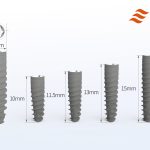
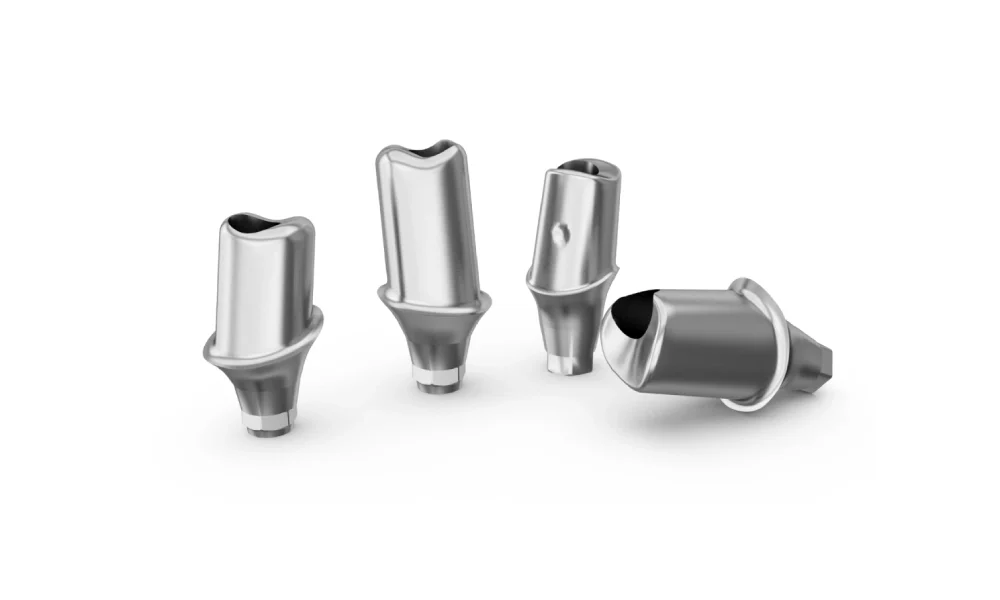
As one of the core components in modern implant dentistry, a dental implant abutment is a precisely engineered intermediate connector that seamlessly joins the implant fixture to the prosthetic crown.
It is positioned above the gingival line, with one end tightly connected to the implant embedded in the alveolar bone — forming a stable osseointegrated foundation — and the other end supporting the final crown, ensuring accurate positioning and firm fixation.
The abutment’s design not only optimizes force transmission, evenly distributing occlusal stress to the implant and surrounding bone to minimize concentration points, but also addresses aesthetic considerations. Its shape, color, and surface finish are meticulously designed to integrate harmoniously with the natural teeth and gingival tissue, achieving the perfect balance between function and beauty.
Thus, the dental abutment is not only critical for functional recovery but also essential for enhancing the natural appearance and patient confidence after restoration.
How Does an Abutment Work?
The abutment serves as the key connector within the implant system, ensuring a precise and stable link between the implant and the prosthetic crown.
Its working principle is both sophisticated and efficient. After the implant fixture is successfully placed into the alveolar bone and allowed sufficient healing time for osseointegration, the abutment is carefully installed onto the top of the implant.
This connection process demands extreme precision to achieve a seamless mechanical fit, typically secured by a specially designed locking mechanism or screw system to ensure long-term stability. Once properly seated, the abutment acts as a solid support platform for the prosthetic crown.
The custom-made crown is then fixed onto the abutment, restoring not only chewing function but also natural aesthetics through a carefully designed shape and shade that blend perfectly with adjacent teeth.
Therefore, the abutment’s operation embodies a combination of mechanical precision, biomechanical design, and aesthetic integration, making it a critical step in successful implant restoration.
Types of Dental Implant Abutments
Choosing the right abutment type is essential to achieving a successful restoration outcome. Based on clinical needs and restoration approaches, dental implant abutments can generally be categorized into the following types, each with its own unique features and applications:
- Standard Abutment (Stock Abutment):
The most common and basic type, suitable for the majority of routine implant cases. Standard abutments come in predefined sizes and shapes, making installation straightforward and cost-effective. They meet general restorative needs and provide reliable stability. - Custom Abutment:
Designed specifically for each patient using digital scanning and CAD/CAM technology, custom abutments achieve a precise fit to individual gingival contours and tooth alignment. They offer superior aesthetics and are ideal for anterior restorations or complex cases requiring high esthetic precision. - Angled Abutment:
When implant placement angles are less than ideal due to anatomical limitations or surgical deviations, angled abutments allow correction of prosthetic angulation, ensuring proper alignment with adjacent teeth and improved overall aesthetics and functionality. - Multi-Unit Abutment:
Used for multiple or full-arch restorations, multi-unit abutments connect several implants simultaneously, providing a stable foundation for bridges or full-arch prostheses. They simplify the prosthetic process and enhance overall stability and chewing efficiency.
Materials of Dental Implant Abutments
The choice of abutment material is crucial for achieving long-term stability, biocompatibility, and aesthetic performance. Common materials include:
- Titanium:
Renowned for its strength, corrosion resistance, and biocompatibility, titanium is the most widely used abutment material. It withstands complex intraoral mechanical forces and forms a strong bond with bone tissue, ensuring long-term success. Titanium also causes minimal soft-tissue irritation, promoting faster healing and healthier gingiva. - Zirconia:
As a high-performance ceramic, zirconia offers tooth-like color and translucency, making it ideal for anterior aesthetic restorations. It combines excellent biocompatibility with good mechanical strength, fulfilling patients’ aesthetic expectations for natural-looking results. - Titanium Base + Zirconia Combination (Ti-Base):
This hybrid design has become increasingly popular, merging titanium’s durability with zirconia’s beauty. The titanium base ensures a secure connection to the implant, while the zirconia portion provides superior aesthetics. This combination achieves both strength and appearance, making it a preferred choice for patients requiring optimal performance and esthetics.
Lifespan of Dental Implant Abutments
As the key connector between the implant and crown, an abutment’s lifespan directly affects the overall success and longevity of the implant restoration. Under normal conditions and with proper maintenance, a high-quality abutment can last 10–20 years or more.
However, several factors influence its durability:
- Surgical Precision and Installation Accuracy:
Proper implant placement and precise abutment installation are fundamental. Misalignment, gaps, or insufficient torque can lead to mechanical failure or loosening over time. - Oral Hygiene and Maintenance:
Good oral hygiene significantly extends abutment lifespan. Regular brushing, flossing, and professional cleaning help prevent peri-implantitis and maintain tissue health around the abutment. - Occlusal Force and Usage Habits:
Excessive or uneven biting forces — for instance, from bruxism or clenching — can accelerate wear or loosening. Patients should avoid hard foods and maintain balanced occlusion. - Regular Checkups and Professional Care:
Routine dental visits allow early detection of potential issues such as inflammation or micro-movements. Professional maintenance ensures both the implant and abutment remain in optimal condition.
Differences Among Abutment Interfaces of Various Brands
Different implant brands feature distinct abutment interface designs, each tailored to their proprietary engineering philosophies and clinical performance goals.
These variations affect compatibility, stability, and sealing, which in turn influence long-term implant success.
Common connection types include internal hex, external hex, and conical (tapered) connections:
- Internal Hex: Offers precise mechanical locking and anti-rotation stability, minimizing the risk of loosening.
- External Hex: Allows easy handling and alignment during surgery while maintaining good connection stability.
- Conical Connection: Uses a tapered fit that enhances self-locking and sealing, reducing microleakage and bacterial infiltration.
Because of these structural differences, it is essential to ensure brand-specific compatibility when selecting an abutment.
Mismatched connections — even if seemingly similar — can cause microgaps, leakage, or instability, potentially leading to peri-implantitis, loosening, or implant failure.
Therefore, clinicians must carefully select abutments that precisely match the implant system, ensuring reliable long-term performance and patient safety.
Conclusion
As a core component of implant restoration, the abutment plays a decisive role in both functional and aesthetic outcomes.
Clinicians should comprehensively evaluate each patient’s specific oral condition — including bone quality, gingival biotype, and restoration site requirements.
Aesthetic demands, such as anterior tooth visibility, must also be considered, alongside the mechanical compatibility between implant and abutment.
Only by balancing these factors can the most suitable abutment be chosen — one that provides strong fixation, optimal force distribution, natural appearance, and long-term stability.
A well-chosen abutment not only ensures the success of the restoration but also helps patients regain confidence, comfort, and a beautiful, natural smile for years to come.