Bone augmentation remains one of the most important procedures in modern implant dentistry. When horizontal or vertical bone volume is insufficient, clinicians need a predictable way to rebuild lost bone and create a stable foundation for implant placement. In this process, maintaining regenerative space is critical. Without sufficient support, the membrane may collapse, soft tissue pressure may reduce the available volume, and bone regeneration can become less predictable.
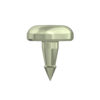
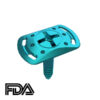
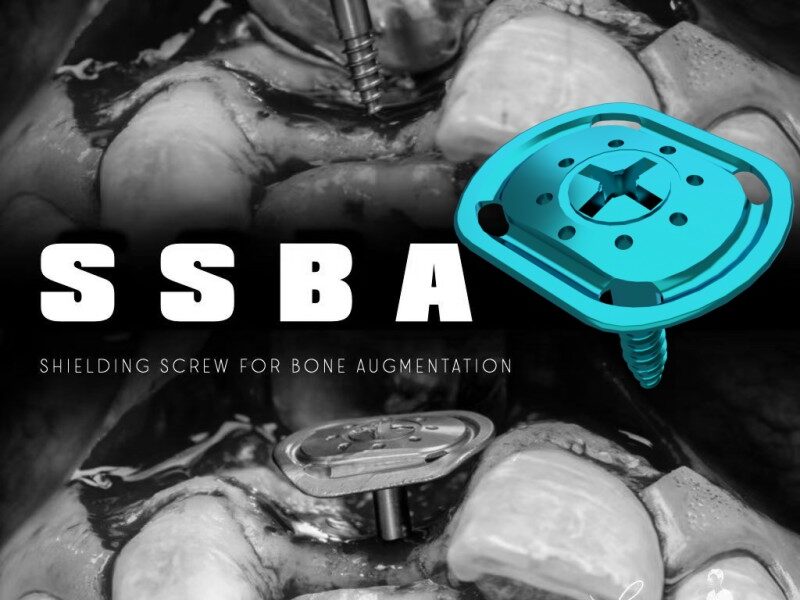
Today, the technology is moving beyond the limitations of traditional tenting screws. A newer generation of Shielding Screw (Tenting Screw / Umbrella Screw), co-developed by Dr. Jun Li and DentalMaster, introduces a larger head design, microporous structure, flexible contouring ability, and a thinner profile to improve both biological performance and clinical handling.
This article explains what tenting screws are, when they are used, how they work, and why the latest technology offers important advantages over traditional designs.
What Is a Tenting Screw?
A tenting screw is a fixation and space-maintaining device used in dental bone grafting and guided bone regeneration procedures. It is called a “tenting” screw because it works like a tent pole: it lifts and supports the membrane, creating a protected space underneath where bone graft material can remain stable and new bone can regenerate.
In implant dentistry, tenting screws are commonly used in cases of:
- Horizontal ridge augmentation
- Vertical ridge augmentation
- Guided bone regeneration (GBR)
- Localized bone defects prior to implant placement
They are especially helpful when clinicians need to prevent membrane collapse and preserve graft volume during healing.
What Is the Function of a Tenting Screw?
The main function of a tenting screw is to maintain space under the membrane during bone regeneration.
In bone grafting procedures, the body needs a stable and protected environment for new bone to form. If the membrane collapses into the grafted area, the available regenerative space is reduced. This can compromise the final bone volume and affect implant planning.
Tenting screws help by:
- Supporting resorbable or non-resorbable membranes
- Preventing soft tissue pressure from collapsing the grafted site
- Stabilizing the regenerative volume
- Helping maintain the desired contour of the augmented ridge
- Improving the predictability of bone formation
In simple terms, tenting screws “hold up” the regeneration zone so that bone has the space it needs to develop properly.
When Are Tenting Screws Used?
Tenting screws are typically used in bone augmentation procedures when additional bone volume is needed before implant placement or during reconstructive treatment.
They are often indicated when:
- The alveolar ridge is too narrow for implant placement
- Vertical bone height is insufficient
- A membrane needs support during GBR
- The clinician wants better graft volume maintenance
- A simplified alternative to traditional bone plate techniques is preferred
As implant dentistry continues to advance, tenting screws are becoming an increasingly practical option for clinicians who want to simplify surgery while maintaining strong regenerative principles.
How Is the Latest Tenting Screw for Bone Augmentation Technology Different from Traditional Tenting Screws?
The latest generation of tenting screw technology goes beyond simple space maintenance. It is designed not only to support the membrane, but also to improve blood supply, adapt better to different defect shapes, and reduce soft tissue irritation.
Below is a clear comparison between traditional tenting screws and the latest shielding screw technology:
| Feature | Traditional Tenting Screw | Latest Shielding Screw / Tenting Screw Technology |
|---|---|---|
| Head Design | Smaller support head | Larger head for wider and more stable space maintenance |
| Blood Supply Support | Limited biological enhancement | Microporous technology helps improve blood supply and revascularization |
| Adaptability | More limited in complex defect morphologies | Flexible contouring design adapts more easily to different bone defect shapes |
| Soft Tissue Impact | Higher profile may increase soft tissue tension | Ultra-thin 0.8 mm screw head helps reduce gingival irritation and soft tissue pressure |
| Clinical Efficiency | Supports space but may still require additional complex steps | Helps simplify bone augmentation procedures and improve clinical workflow |
| Diameter Options | More limited depending on system | Available in 5 mm and 8 mm head diameters for different clinical needs |
| Conceptual Role | Mainly used as a space-maintaining screw | Can serve as part of the SSBA concept, replacing the traditional autogenous bone plate approach |
This comparison shows that the newest technology is not just a minor upgrade. It represents a more advanced approach to both surgical handling and regenerative biology.
Advantages of the Latest Tenting Screw for Bone Augmentation Technology
Larger Head for Greater Regenerative Space
One of the most obvious improvements is the larger screw head. A larger head means a broader support area under the membrane, which can help create and preserve a bigger regenerative space. This is especially valuable in vertical and complex horizontal augmentation cases where space maintenance is often the key to success.
Microporous Structure for Better Blood Supply
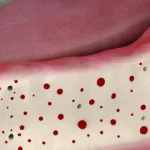
A major innovation of the latest shielding screw is its microporous technology. Blood supply is one of the most important factors in successful bone regeneration. By improving local revascularization, microporous surfaces may help support the biological environment needed for higher-quality bone formation.
Flexible Contouring for Different Defect Shapes
Bone defects are rarely identical. Some are narrow, some are wide, and some have irregular contours. A newer screw design with flexible contouring can adapt more naturally to different defect morphologies, making it easier for the clinician to achieve the desired regenerative architecture.
Ultra-Thin 0.8 mm Head for Reduced Soft Tissue Tension
Soft tissue management is a critical part of successful augmentation. A bulky profile can increase gingival irritation and tension during flap closure. The ultra-thin 0.8 mm screw head helps reduce this problem, supporting better soft tissue adaptation and more comfortable healing conditions.
Dual Head Diameter Options
The availability of 5 mm and 8 mm head diameters gives clinicians more flexibility. Different defect sizes and regenerative goals require different support geometries. Multiple head options make the system more versatile in real clinical situations.
Easier Clinical Use
Traditional techniques can be effective, but they are often technique-sensitive and time-consuming. The latest tenting screw technology is designed to make bone augmentation more efficient and easier to perform, without losing the biological principles behind successful grafting.
Technical Breakthrough: SSBA Replacing the Traditional Bone Plate Technique
One of the most important developments behind this innovation is the SSBA concept.
Traditionally, autogenous bone plate techniques require harvesting a bone plate, shaping it, fixing it, and then filling the area with graft material. While effective, this approach can be surgically demanding and time-intensive. It also increases the number of procedural steps and may add complexity for both the clinician and the patient.
The SSBA concept uses a shielding screw instead of a traditional autogenous bone plate. The clinician fills the area with 100% autogenous bone chips, while the screw helps create and protect the regenerative contour. This approach maintains the same biological principle of autogenous bone grafting but makes the overall workflow simpler and more practical.
This breakthrough offers several clinical benefits:
- Reduced bone harvesting complexity
- Fewer surgical steps
- Shorter procedure time
- Easier handling in clinical practice
- Potential reduction in the number of surgical stages for the patient
In other words, SSBA does not just change the instrument. It improves the entire augmentation workflow.
Product Highlights
- Flexible Contouring: designed to adapt to different bone defect morphologies
- Ultra-Thin 0.8 mm Screw Head: helps minimize gingival irritation and soft tissue tension
- Microporous Technology: supports blood supply and revascularization for improved bone regeneration quality
- Dual Head Diameters: available in 5 mm and 8 mm
- Packaging: supplied as 5 screws per pack
This innovation simplifies bone augmentation procedures and helps clinicians achieve a more efficient and more controllable regenerative process.
Conclusion
As bone augmentation techniques continue to evolve, the role of tenting screws is becoming more important than ever. They are no longer just simple support devices. With the latest innovations in head design, microporous structure, contour adaptability, and low-profile engineering, modern tenting screws for bone augmentation are helping clinicians perform grafting procedures with greater efficiency and predictability.
Compared with traditional tenting screws, the newest shielding screw technology offers a larger regenerative space, improved biological support, easier defect adaptation, and a more streamlined clinical workflow. More importantly, the SSBA concept represents a genuine technical breakthrough by replacing the traditional bone plate approach with a simpler and more clinically practical method.
For clinicians looking to improve bone grafting outcomes while reducing surgical complexity, the latest tenting screw technology is a promising direction in 2026 and beyond.
FAQ
What is the tenting technique for implants?
The tenting technique in implant dentistry is a bone augmentation method that uses tenting screws to elevate and support a membrane over the grafted site. This creates and preserves a protected space where bone regeneration can take place before implant placement.
What are tenting screws for bone grafting?
Tenting screws for bone grafting are specialized screws used to maintain space during guided bone regeneration and bone augmentation procedures. They help support the membrane, stabilize the grafted area, and prevent soft tissue collapse.
What are the benefits of the tent screw?
The benefits of the tent screw include stable space maintenance, improved graft volume preservation, support for membrane positioning, simplified augmentation procedures, and better conditions for predictable bone regeneration.
What is bone tenting?
Bone tenting refers to the technique of creating and maintaining a regenerative space over a bone defect, usually with the help of tenting screws and a membrane. The purpose is to protect the graft material and allow new bone to form in a controlled environment.
How long do implant screws take to heal?
Healing time depends on the clinical situation, bone quality, and whether bone grafting is involved. In general, bone healing and integration after implant-related grafting procedures may take several months. The exact timeline should always be determined by the treating clinician based on the patient’s condition.