
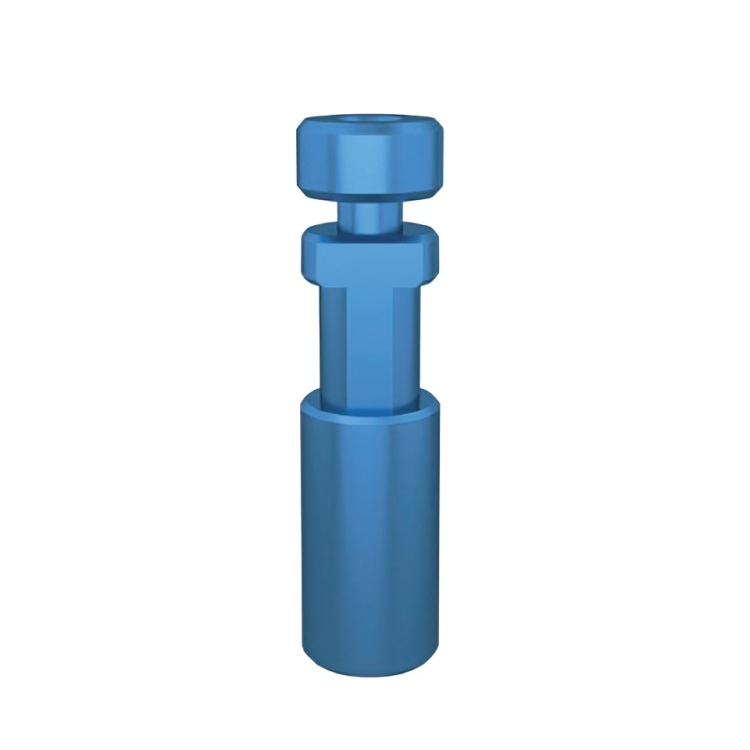
Description
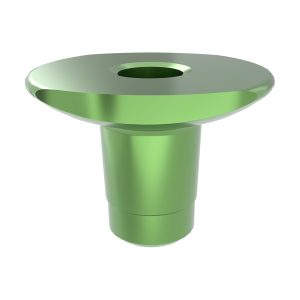
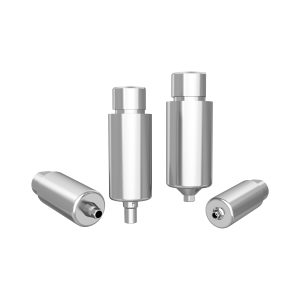
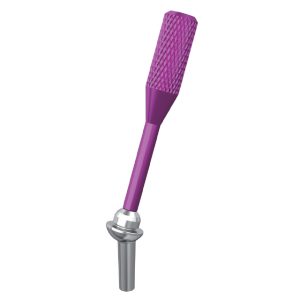
The Bicon Digital Implant Analog Compatible is designed to precisely replicate the implant position, angulation, depth, and internal connection geometry within digitally fabricated working models. Used in conjunction with intraoral scans and 3D printed models, it serves as the critical link between digital treatment planning and accurate prosthetic fabrication.
Features
- Precise Implant Position Replication
Transfers implant position, angulation, depth, and restorative orientation into the physical model. - Accurate Internal Connection Geometry
Replicates the original locking-taper implant interface for predictable prosthetic fit. - Optimized for Digital Workflows
Designed for use with intraoral scanning, CAD software, and 3D printed models. - Supports High-Precision Restorations
Helps minimize discrepancies between the digital design and the final restoration. - Reliable Laboratory Integration
Provides a stable reference point throughout the restorative manufacturing process. - Bicon-Compatible Design
Engineered for compatibility with Bicon-compatible implant systems.
Product Benefits
For Clinicians:
- Better Prosthetic Fit
Improves the accuracy of restorations delivered to the patient. - Reduced Chairside Adjustments
Helps decrease time spent correcting restoration fit. - Predictable Clinical Outcomes
Maintains consistency between digital planning and final restoration delivery. - Supports Modern Digital Dentistry
An essential component of digital implant restorative workflows.
For Dental Laboratories:
- Improve Restoration Accuracy
Supports precise fabrication of implant-supported restorations. - Reduce Remakes
Minimizes fit discrepancies caused by model inaccuracies. - Enhance Workflow Efficiency
Integrates seamlessly into modern CAD/CAM workflows. - Improve Model Consistency
Provides repeatable and reliable implant positioning.
Why Is a Digital Implant Analog Important?
Digital implant restorations depend on accurate transfer of implant data from the patient’s mouth to the laboratory model.
Even small deviations can result in:
- Inaccurate prosthetic fit
- Occlusal discrepancies
- Seating issues
- Increased chairside adjustments
- Additional laboratory remakes
Traditional stone models may also be affected by:
- Material expansion and contraction
- Casting inaccuracies
- Analog placement errors
- Dimensional instability
Modern digital workflows require highly accurate implant analogs to maintain restorative precision.
Traditional Workflow vs Digital Workflow
| Traditional Stone Models | Digital Implant Workflow |
|---|---|
| Potential material distortion | High dimensional accuracy |
| Manual fabrication steps | Digital precision |
| Greater risk of analog positioning errors | Accurate implant replication |
| Increased adjustment requirements | Improved restorative fit |
| Less predictable results | Consistent digital workflow |
Indications
Recommended for:
- Digital Implant Restorations
- CAD/CAM Prosthetics
- 3D Printed Working Models
- Single-Tooth Restorations
- Multi-Unit Restorations
- Full-Arch Implant Cases
- Digital Dental Laboratories


Reviews
There are no reviews yet